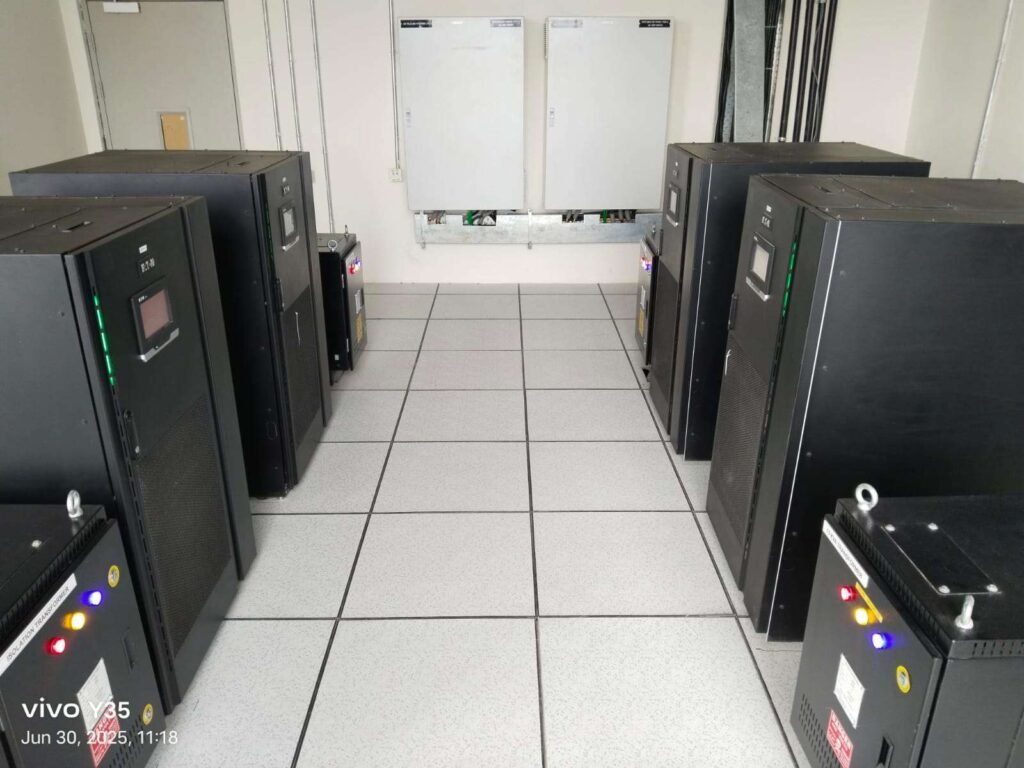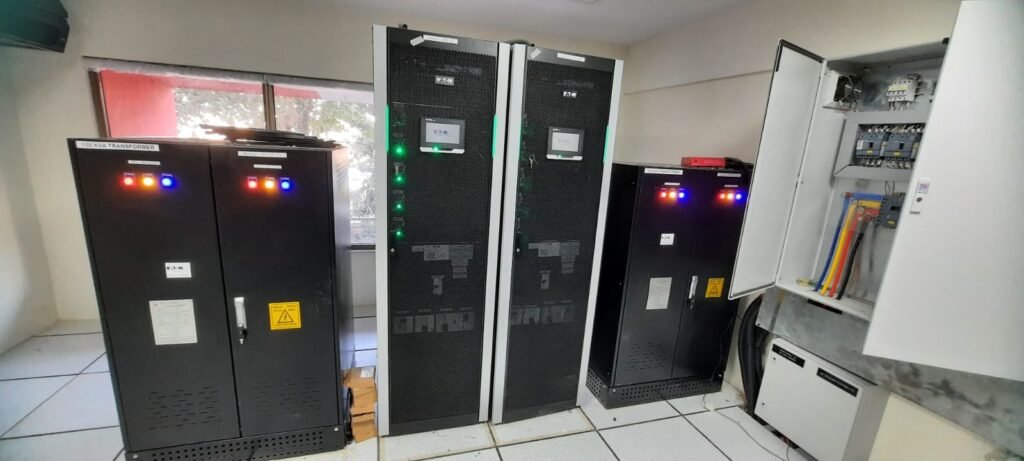
In More practical understanding and Learn into the installation of industrial battery banks for UPS systems, explore knowledge and learn the step-by-step processes covering industrial field project skills of redundant power system for installation, DC Power system connections, maintenance, safety standards, IEEE 1187, and environmental considerations. The objective is to ensure maximum system reliability, preventing shutdowns or downtime even the loss of input/Rows power supply.
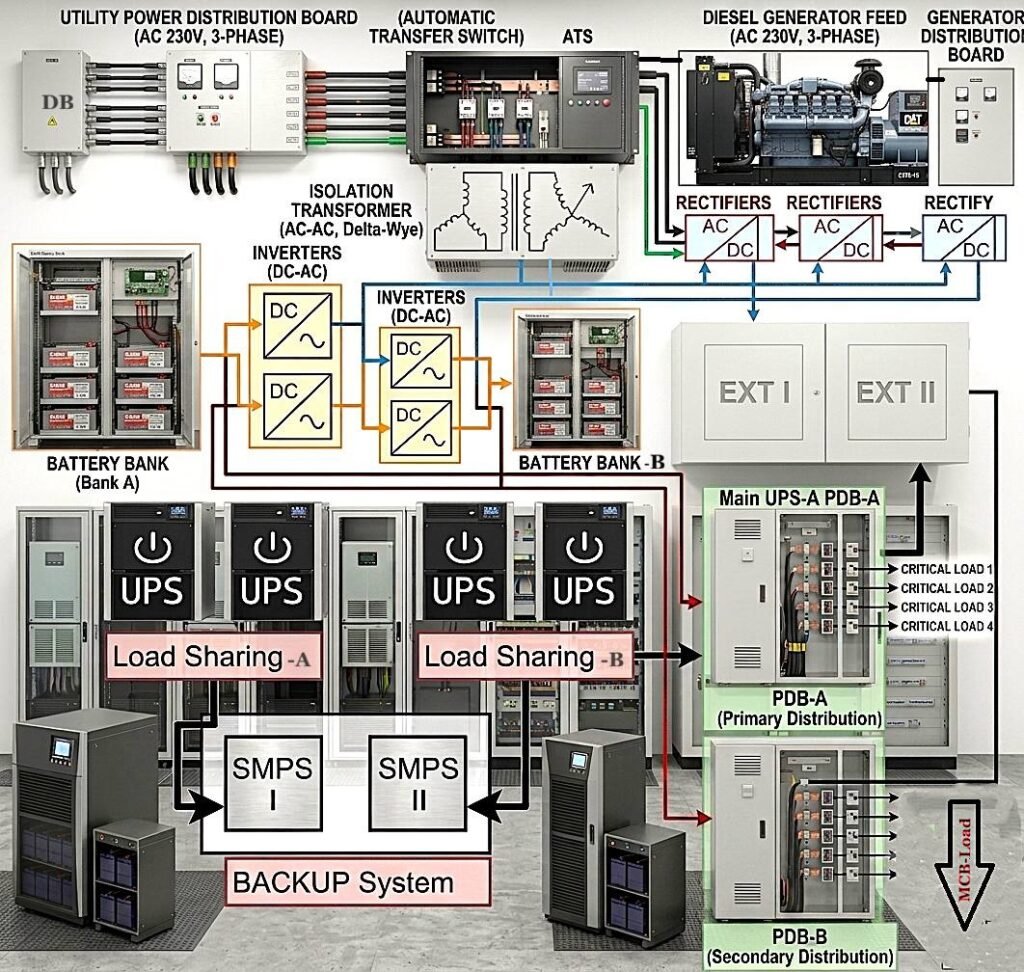
The safety warning regarding industrial power is crucial for both Human and System:
1.Don’t do itself:
Don’t touch or check or maintenance with proper training conducted by supplier vendors and well experiences and understand electrical system and same background portfolio experiences as engineering.
2.Qualified Personnel Only:
Industrial UPS of DC power bank very high storage capacity in (KVA) and voltage level- 200-400V in large ups bank to run system even input power fails it can be lethal. always try to only trained by vendor, certified electrical profession engineer should perform installation, configuration and maintenances or replacement.
3. PPE (Personal Protection Equipment):
Before entry in UPS room for above works then always wear appropriate standard PPE, including arc -rated clothing, insulated Hand gloves, standard shoes and many also face shields.
4.Separation (Space) Between UPS and Battery Bank:
For safety point of view to Maintain at least 3-4 feet (90-120cm) distance between UPS and batteries, also need to be consider spacing around wall and vent to proper (30-60cm) ventilation to reduce rick overheating or worm air fans and it may be voltage drop and fire hazards also avoid Batteries chemical exposure.
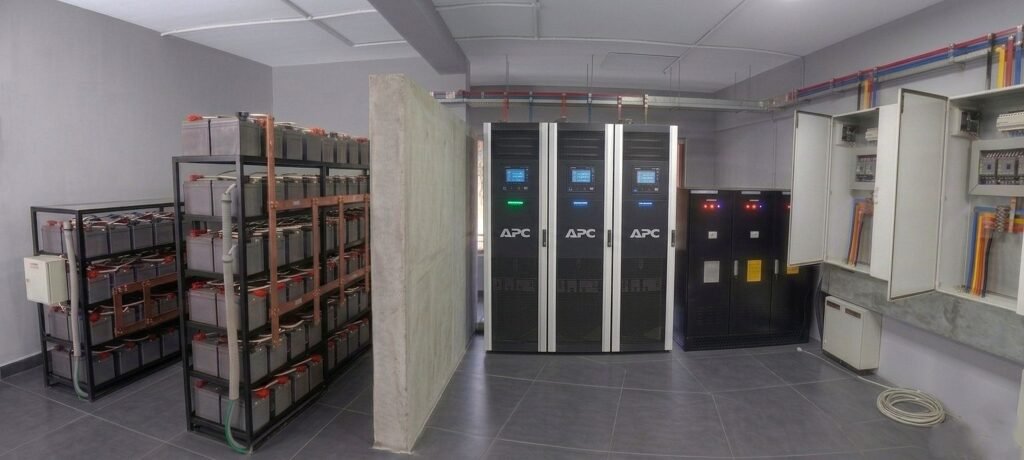
5.Matal Hazards, Grounding, SPD and environmental:
To prevent short circuits and warning alarms, and to keep the room dust-free, remove all metal objects, screws, and unused cables.
Step-by-Step UPS Batteries Installation Overview
1.Room Readiness:
- Deep cleaning with dust -free environment inside floor and on floor.
- Environment to check AC and room temperature stable and its typically – 25°C.
- Ensure proper Ventilation to flow worm air to Prevent heat room and batteries performance.
2.Racking installation and Battery(12-24V) Placement
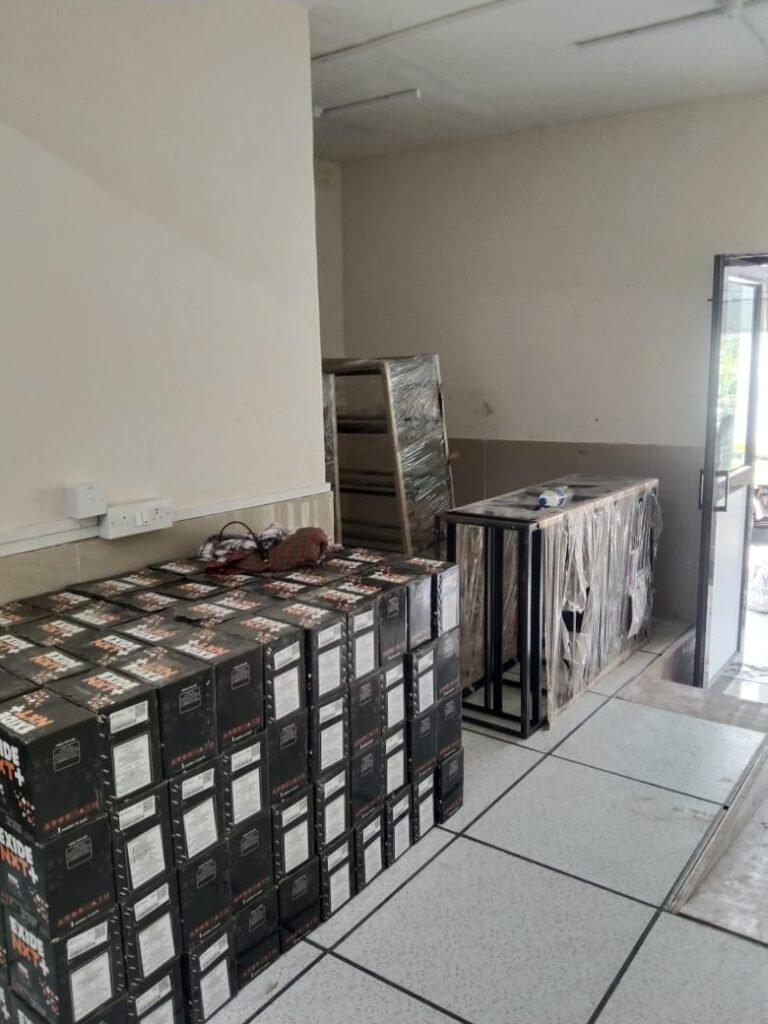
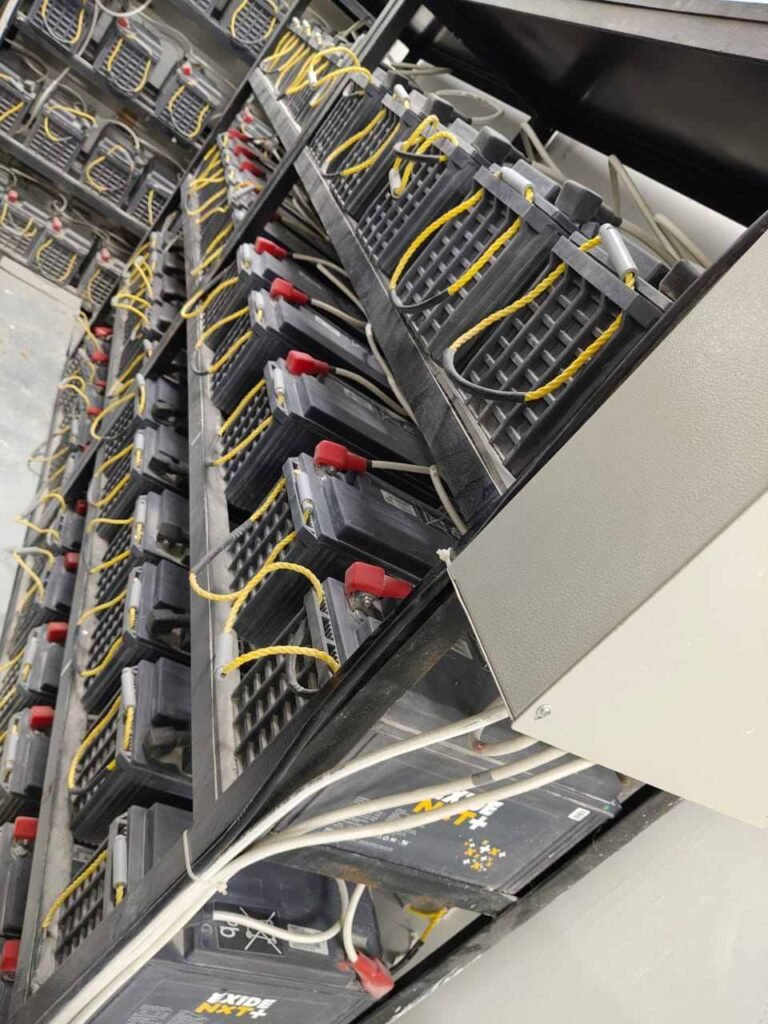
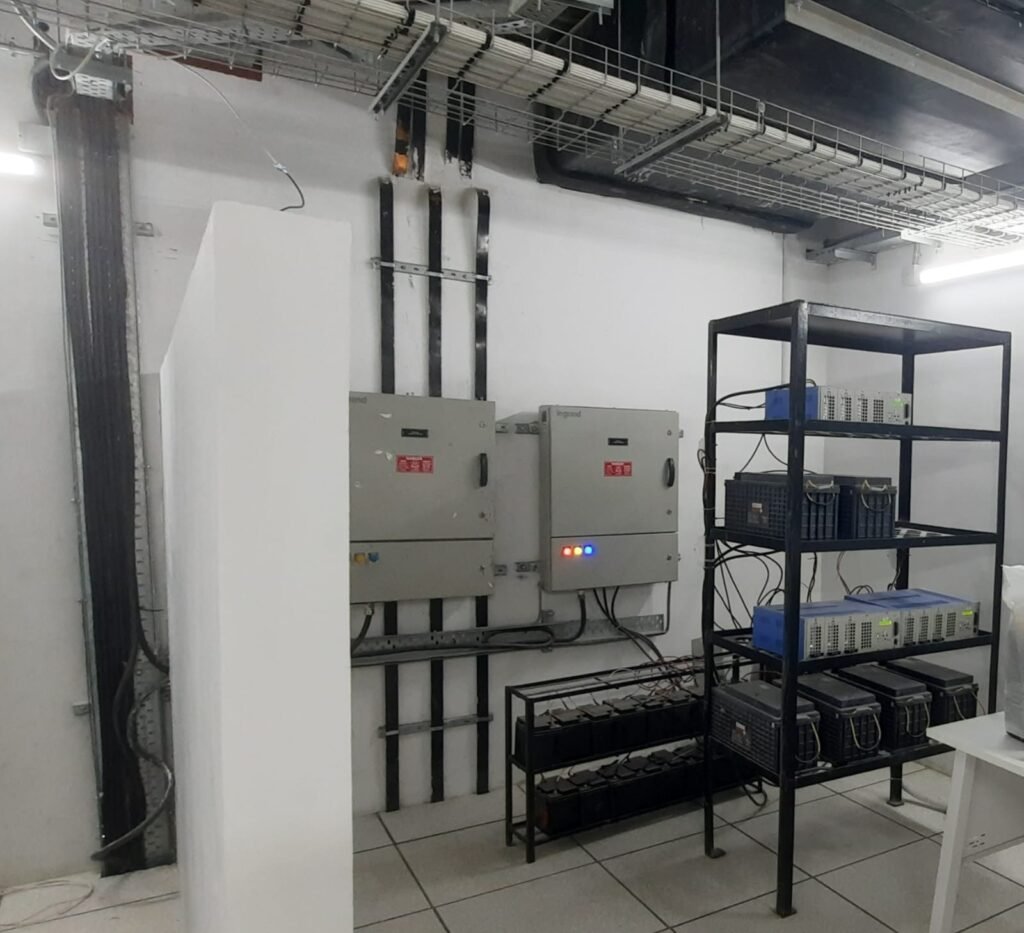
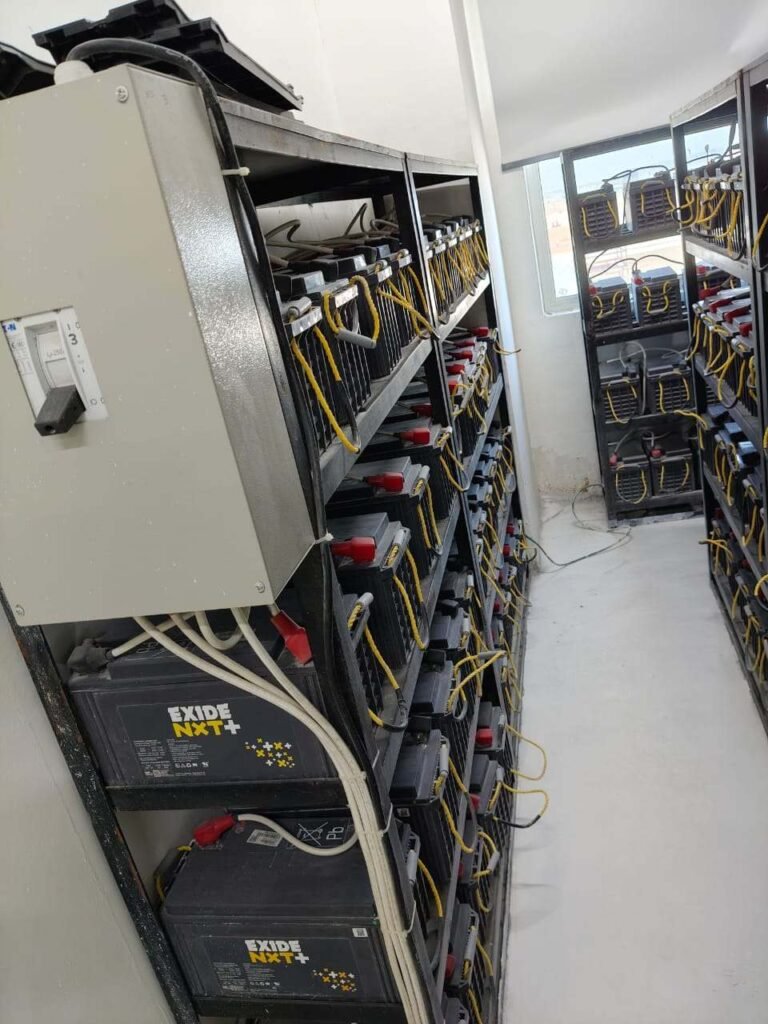
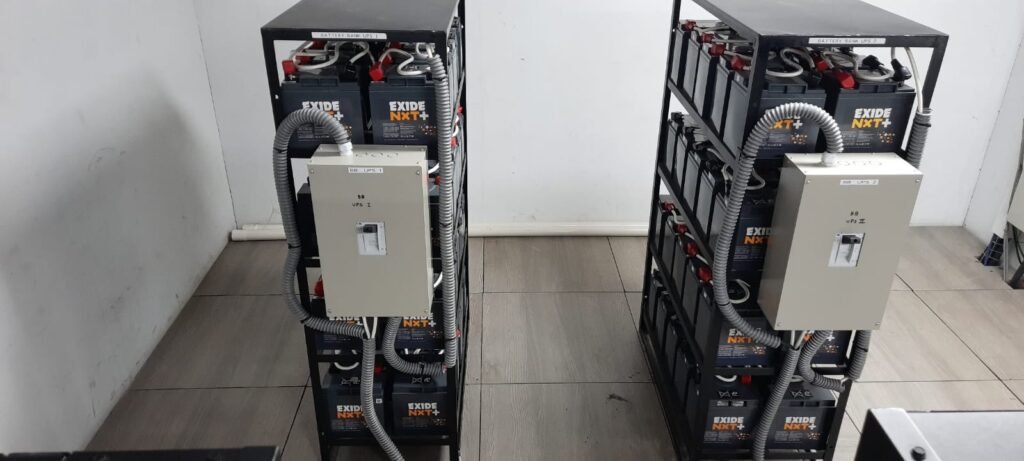
The UPS battery should be mounted on a metal rack according to seismic and structural codes with proper orientation and spacing in series as shown in the image, rather than being placed directly on the floor
3.Battery Interconnection (Series/Parallel) with UPS.
UPS Batteries connected in series to increased or added voltage of each battery (VI+ V2 +V3+V4+V5+……….) and current remains constant .
Each connection of batteries in series ,connected to positive (+) terminal of Cathode of one batteries series to another battery of Negative (-) Terminal of Anode ,similarly to connect next battery connection …
Generally, battery connected for UPS in series to increase Voltage but if want to increase Desire capacity (Amph) then connect in parallel to increase capacity, connect positive-to-positive of cathode (+ +) terminal and negative-to-negative of Anode terminal (- -).when you required maximum current and fixed voltage to perform electrical system for running then we can connect so all depends on specification and requirement
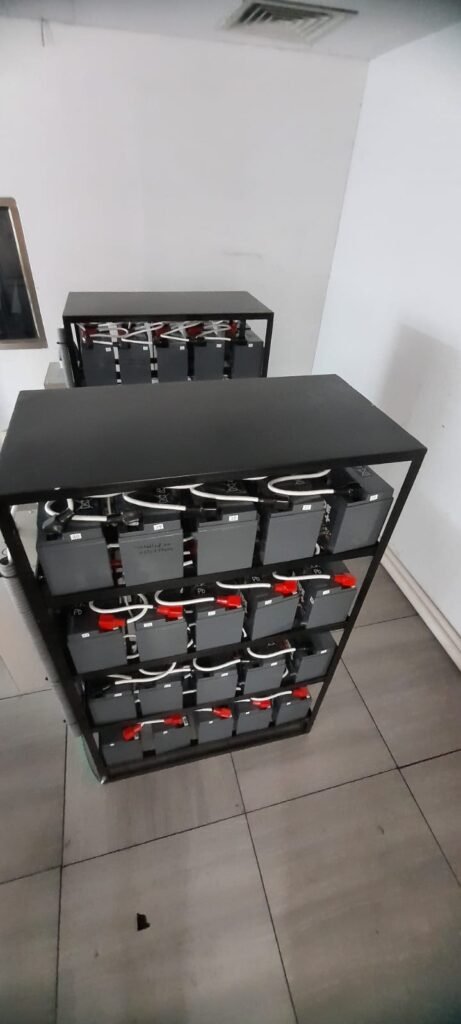
Note to Important Point:
- Avoid Mixing Batteries of different rating and brand Model then capacity to prevent charging and discharging degradation .
- Balance of Battery connection to must be same rating ,capacity ,year and brand so don’t connect to other to avoid charging and potential safety hazard.
- Double -check all polarities ( + ,-) of batteries with Multimeter before connection if connected wrong then battery barker not working or damage of equipment.
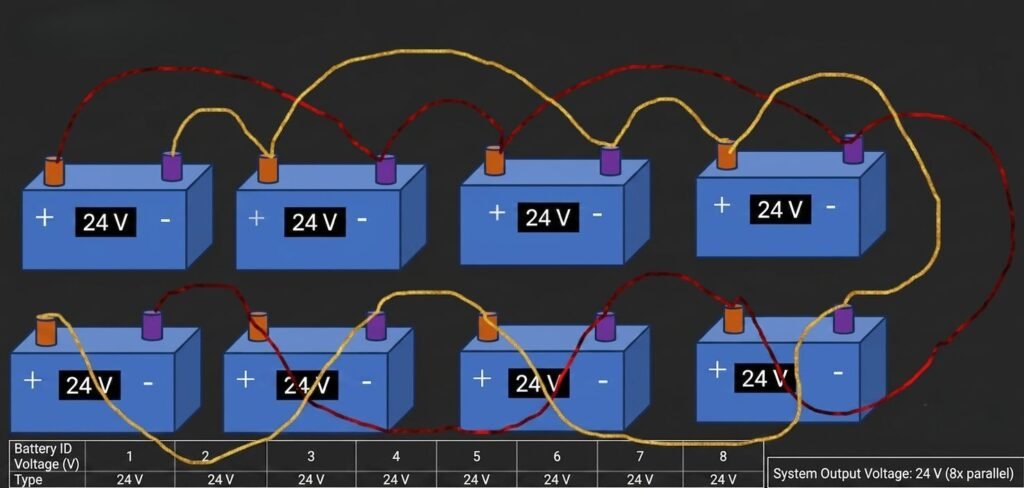
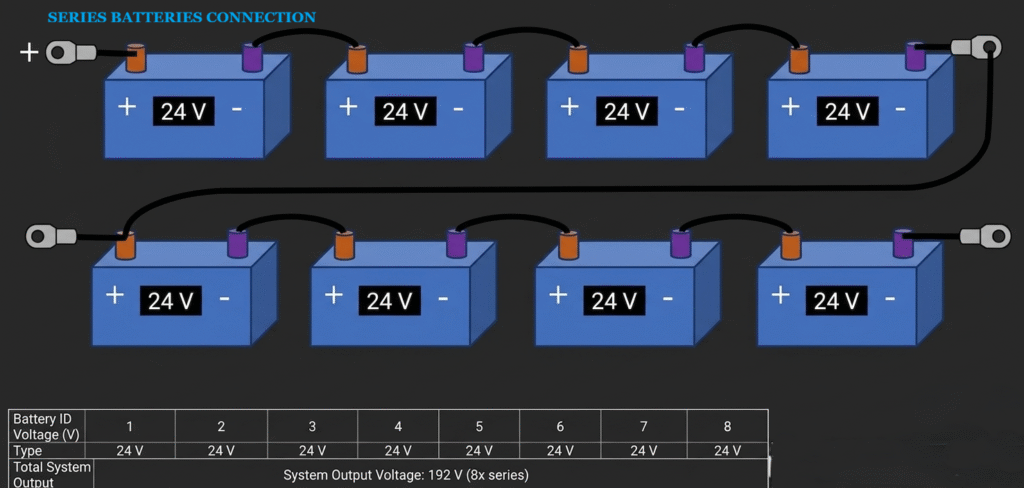
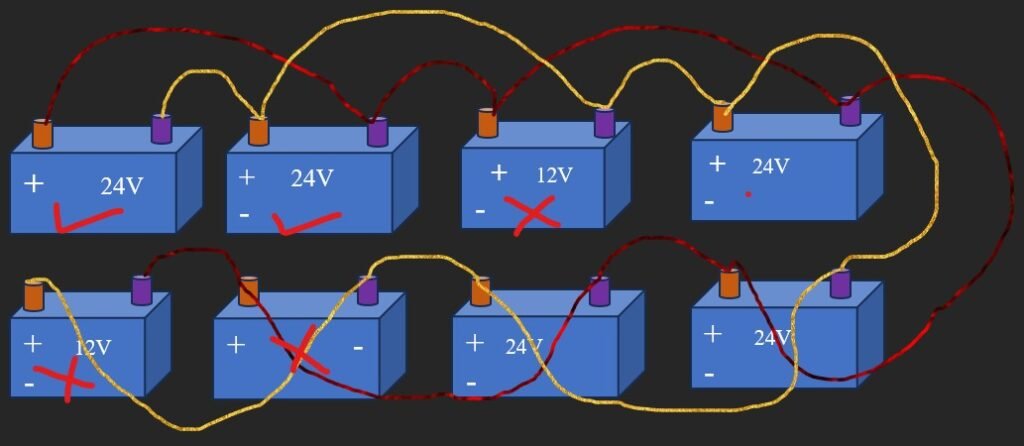
In the last photos shown above, the batteries do not have the same voltage, nor are they of the same brand; furthermore, the battery terminal polarity has not been connected correctly.
4.Busbar, Earthing and Protection Integration:
We can see in batteries bank to follow safety protocol protection (fuses or breakers, earthing Cupper busbar) at the batteries bank seismics -standard to avoid spart and shortcut or system performance.
5.Final Connection to UPS:
In above picture, connected the battery in series and then batteries bank of input connected to Battery Breaker and breaker of output cables to the UPS DC Input Terminal.
Ensure all battery with Marking and labelling tight connection with each terminal of battery.
6. Commissioning and Testing:
UPS batteries bank are not parts of Commissioning and this part of however this is very crucial important role to test performance backup running capacity of UPS, Connection and Layout diagram, SCADA Monitoring to show all electrical parameters like Loading, Battery charger (online/offline), current, Voltage (AC/DC) , frequency ,and also charging and discharging time, UPS load and Load sharing performance test, Failure test to shifted to another UPS.