
Why important?
We know that current always flows along the path of low resistance; therefore, when system equipment is connected to the earth, the current is diverted to the ground, regardless of the power level. Ground faults can generate electrical noise, potentially damaging data and sensitive microchips. Additionally, by avoiding issues such as heavy machinery loads and the frequent tripping of circuit breakers or HVAC units, you can protect your business from costly, unexpected downtime. Furthermore, this safeguards the entire electrical system and equipment against lightning strikes and high-voltage surges, while also protecting people from electric shocks should a live wire accidentally come into contact with the metal casing.
Commercial earthing, equipment grounding, commercial electrical safety standard NFPA 70 / NEC, grounding system installation.
1. Assemble and ready for installation of earthing (Complete).
In This Fig to see that Gi pipe, connected with copper plat and cupper strip as complete set of earthing.
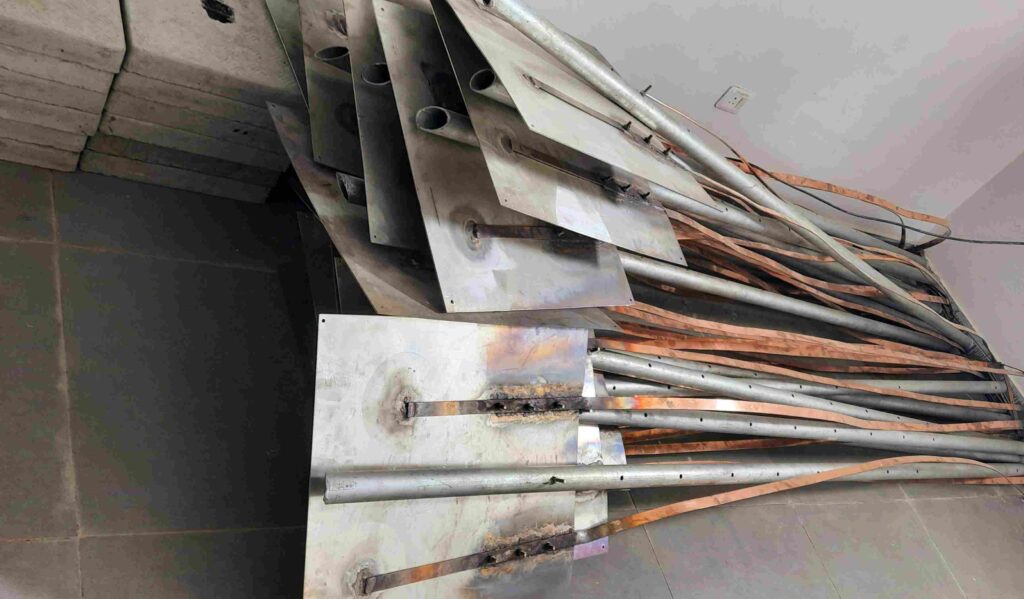
Tips: Before accepting the tender and commencing Project work, be sure to visit the site to assess the soil conditions. Check whether the soil is excessively hard or if the terrain is hilly, as this could make excavation difficult and costly. Additionally, if the soil has low moisture content, achieving a good resistance value may show very challenging and it may lose money so also consider this situation in tender amount.
2. Location identified and Start Digging as per tender and Requirement.
Go through as per specific location and permission to start Digging by using JCB and final finish by Manual by worker as show below picture.
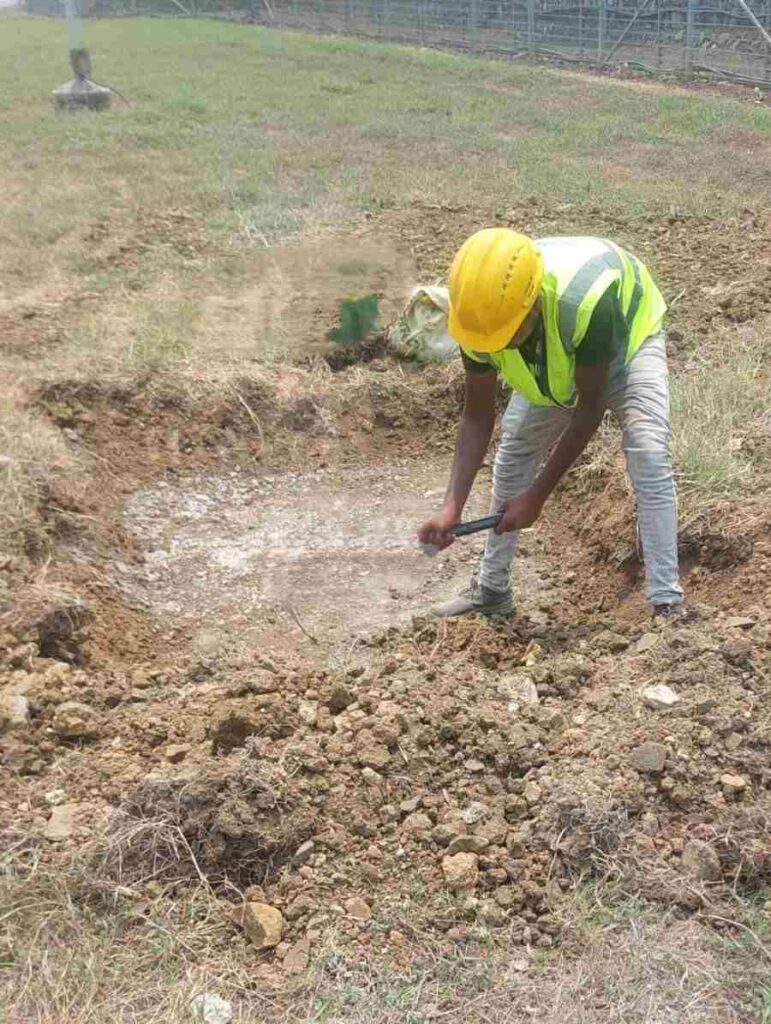
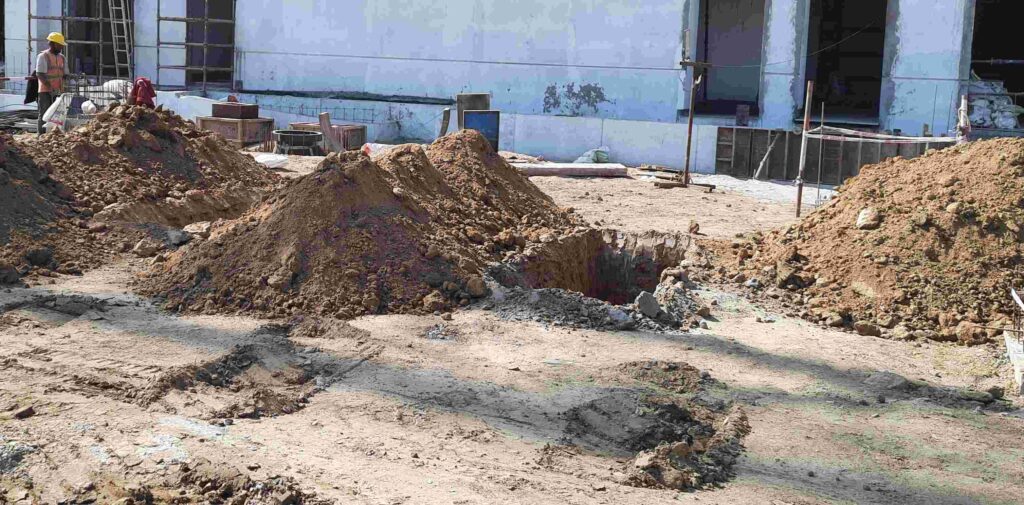
3. Earthing installation and filling the excavated pit with chemicals and materials.
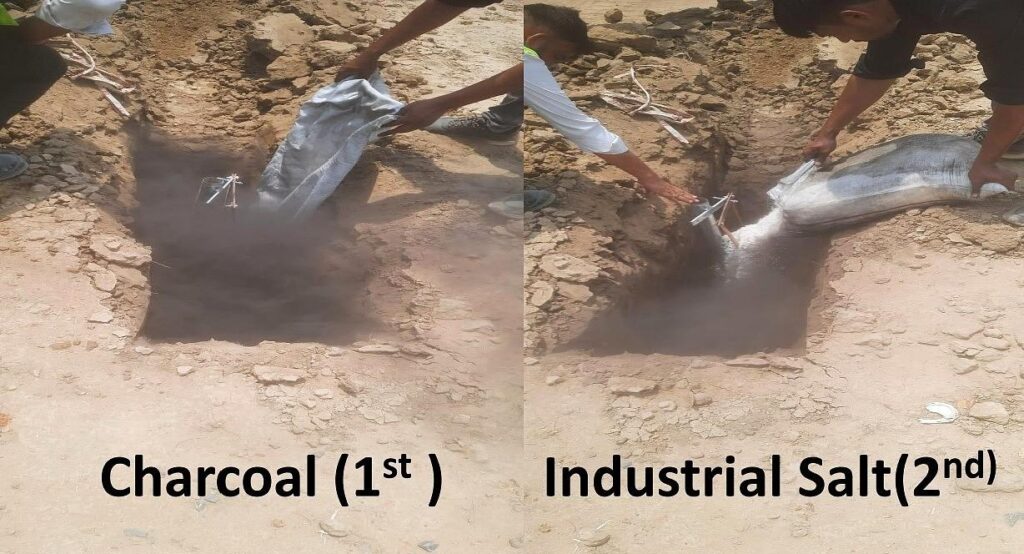
Which material used for earthing to get good resistance and stability for long time.
As per industrial standard we are generally follow to material and also, we can see practical give below visual ground picture.
- Charcoal (Carbon) :50%
- Salt (NaCl) :50%
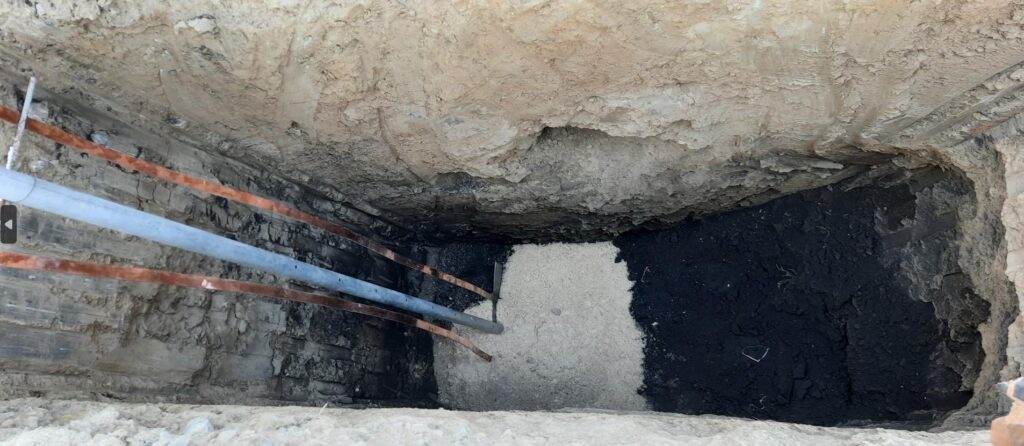
Layer 1(1st step): 15 cm of Charcoal at the bottom.
Layer 2(last step): 15 cm of Salt on top of the charcoal.
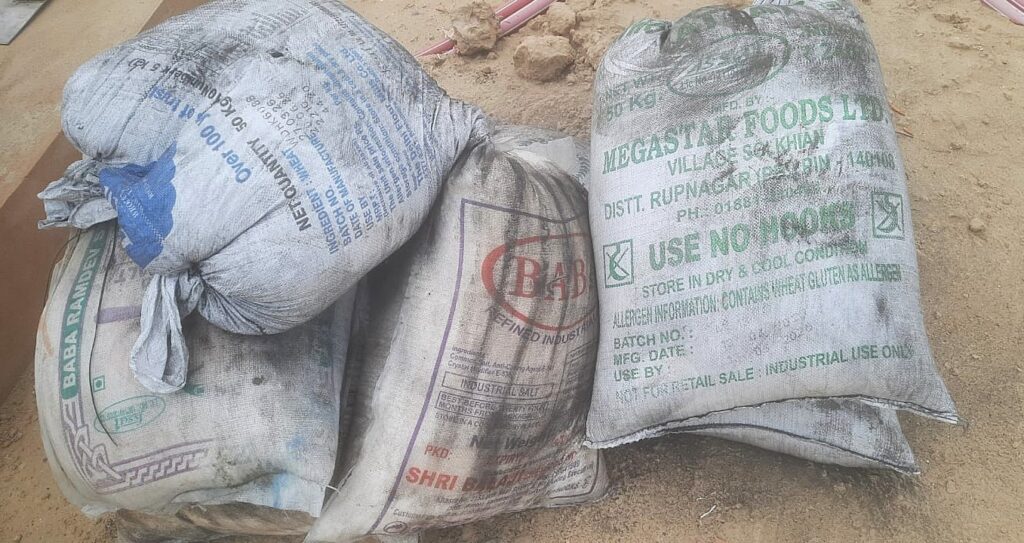
We can see above earthing resistance material as industrial salts and charcoals .
Note: Check packaging and manufacturing date before buying it may be not getting good earthing resistance value in specially hill areal or limestone or red soils due to low moistures constant in soils so it will be very difficult to achieve safe grounding resistance values.
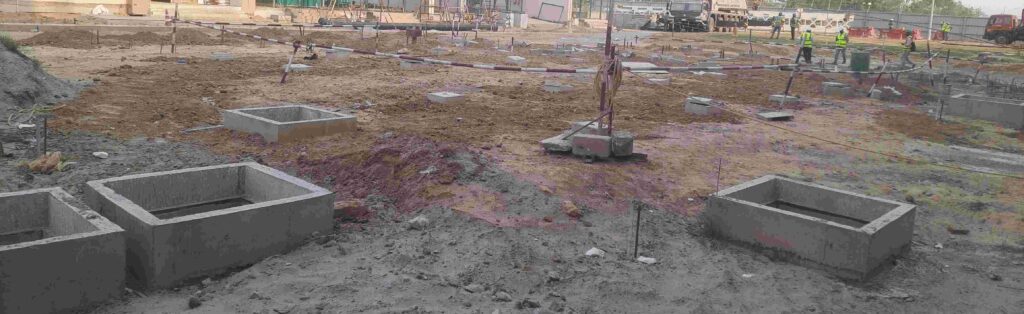
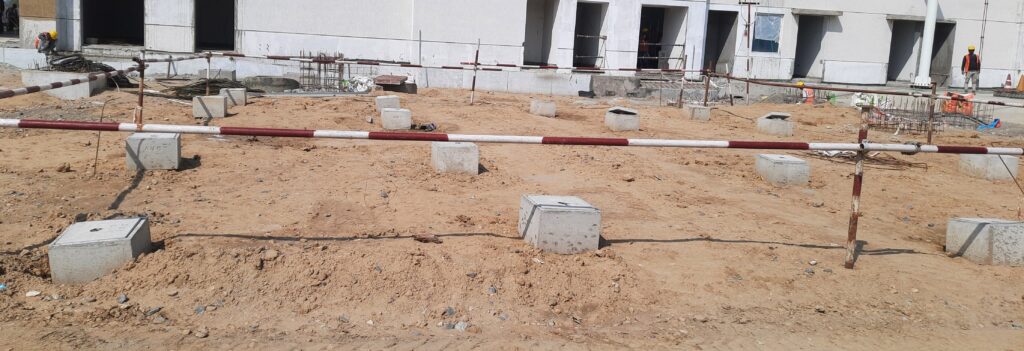
4. Refilling and Earthing chamber (with Proper marking and Resistance on rods)
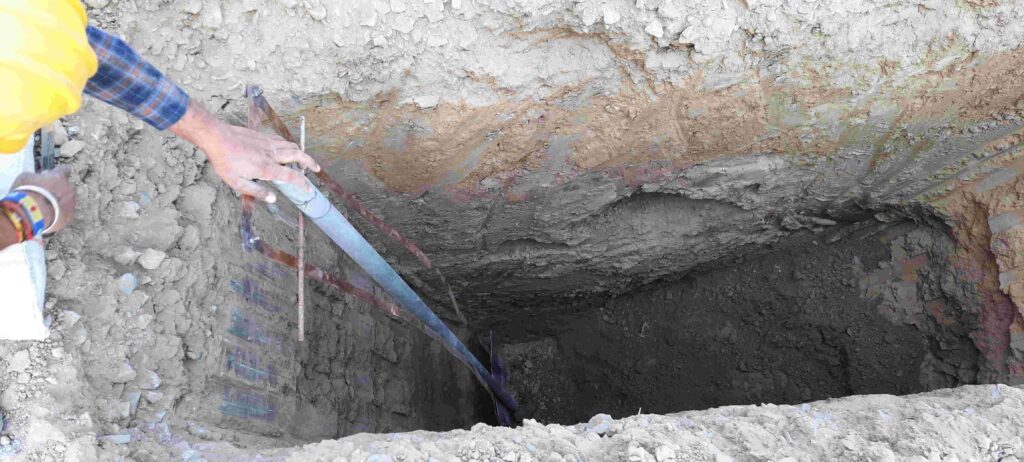
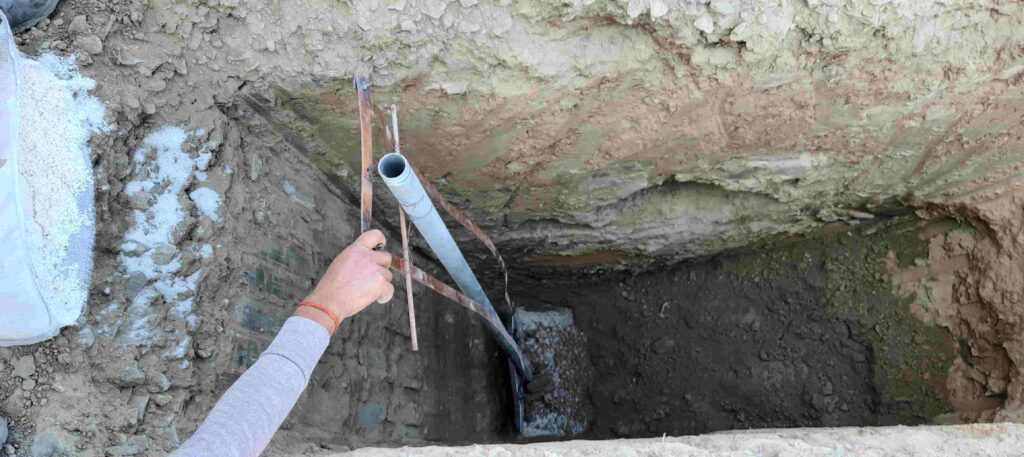
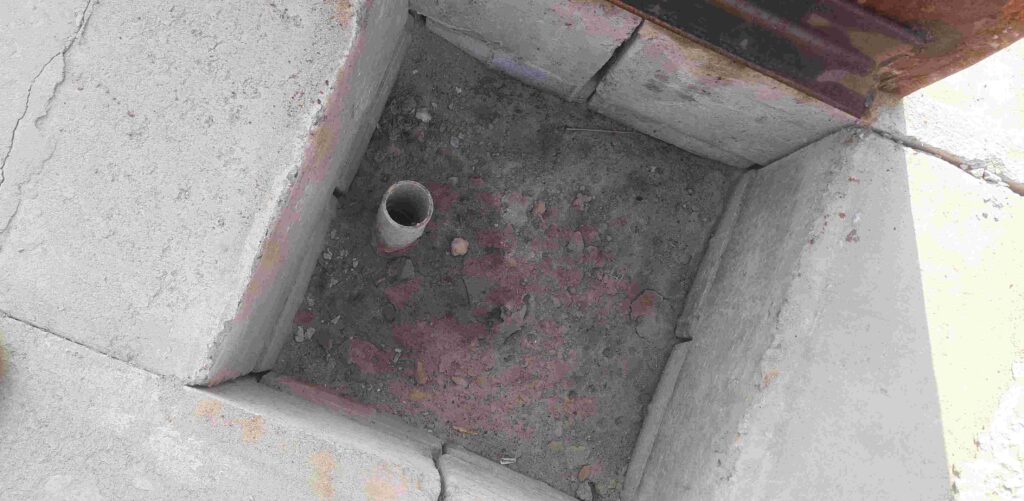
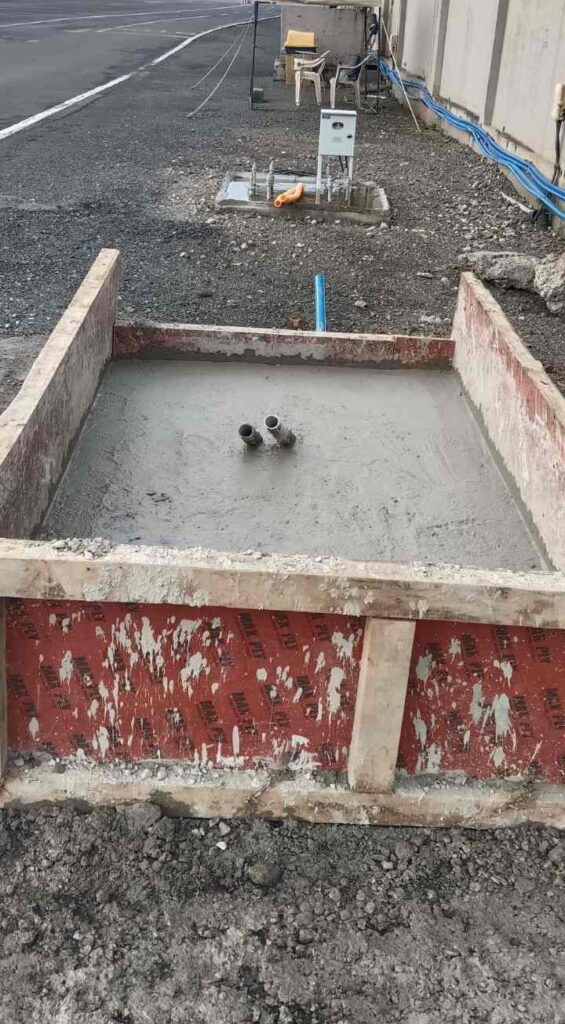
Once the earthing rod is fully installed in the ground, backfill with soil and water sink it; ensure the soil moisture connects effectively with the resistance-enhancing chemicals, then install the earthing chamber—ensuring the rod remains visible and extends above the base level (leaving about a foot of length to connect the earthing strip or cable).
We can see more detail blow in ground Picture.

5.Final stage (earthing strip connection, cable cover, and marking the propeller with paint).
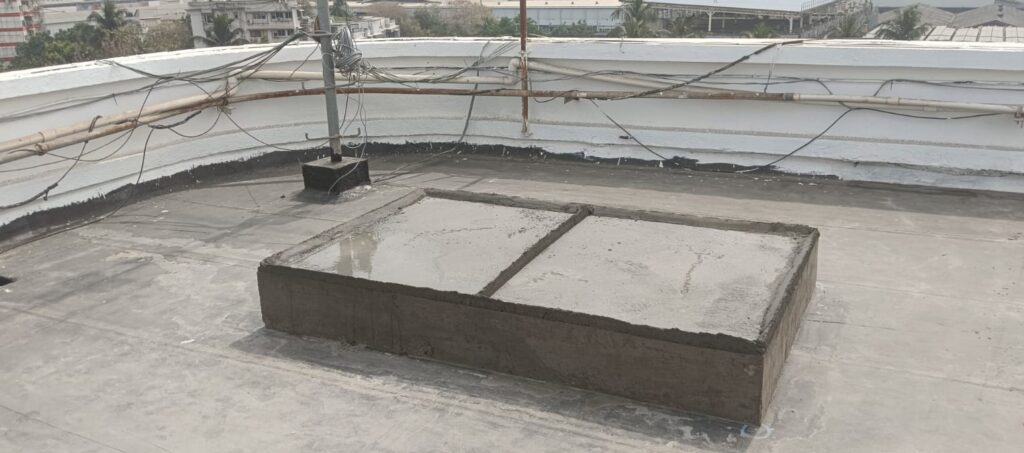
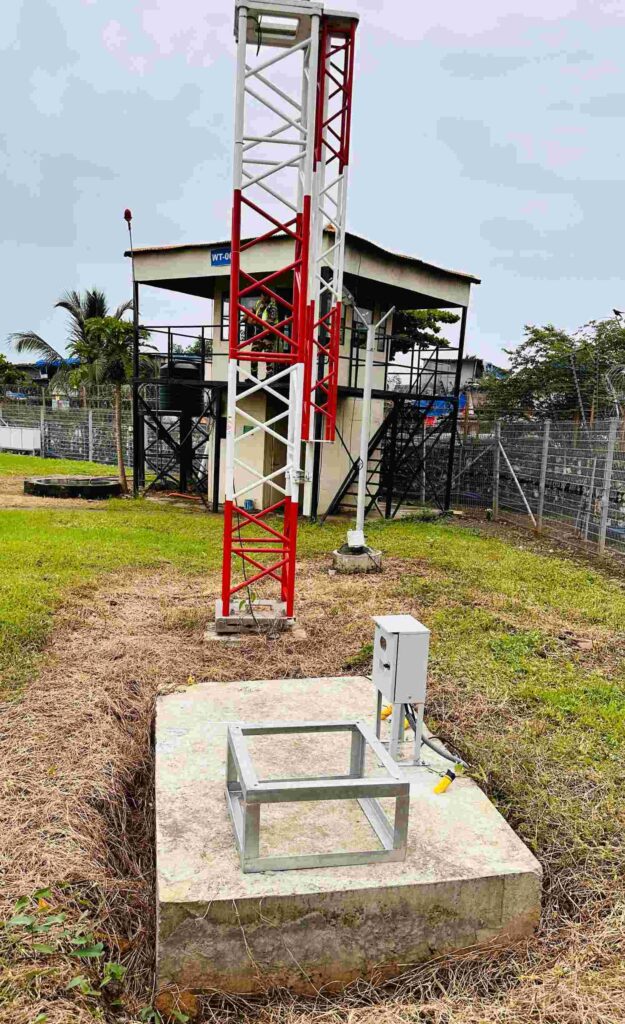
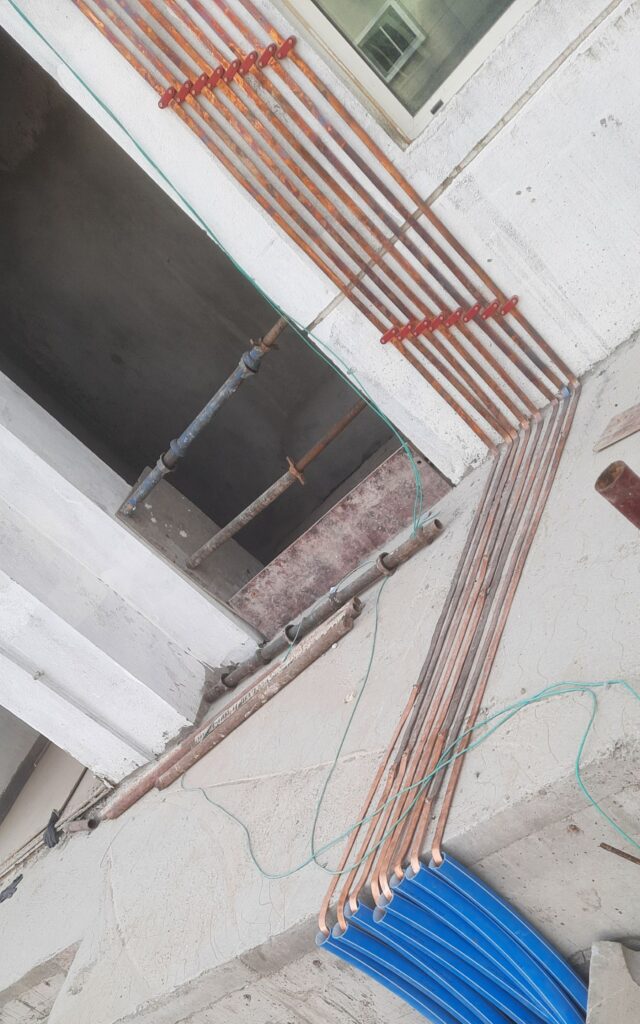
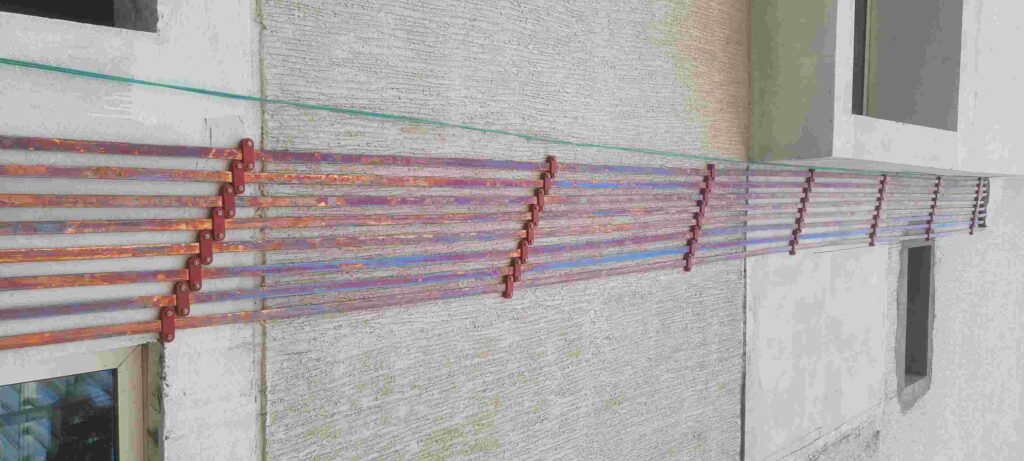
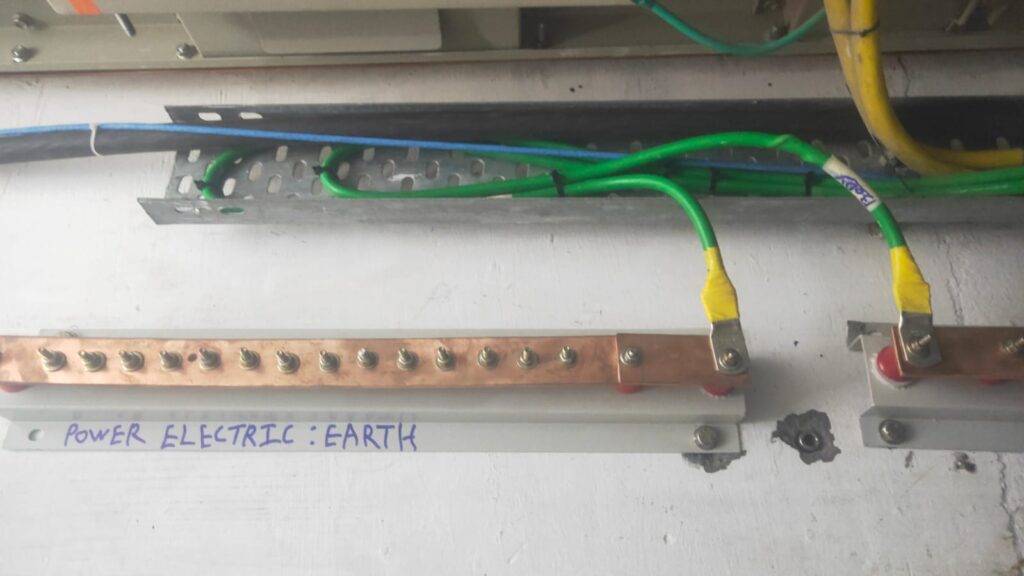
In this picture we can see that how earthing strip (as per standard) and spacing of each to connected with devices.
Marking very important of each earthing pits to easy find fault and also measured resistance and valued of each pit
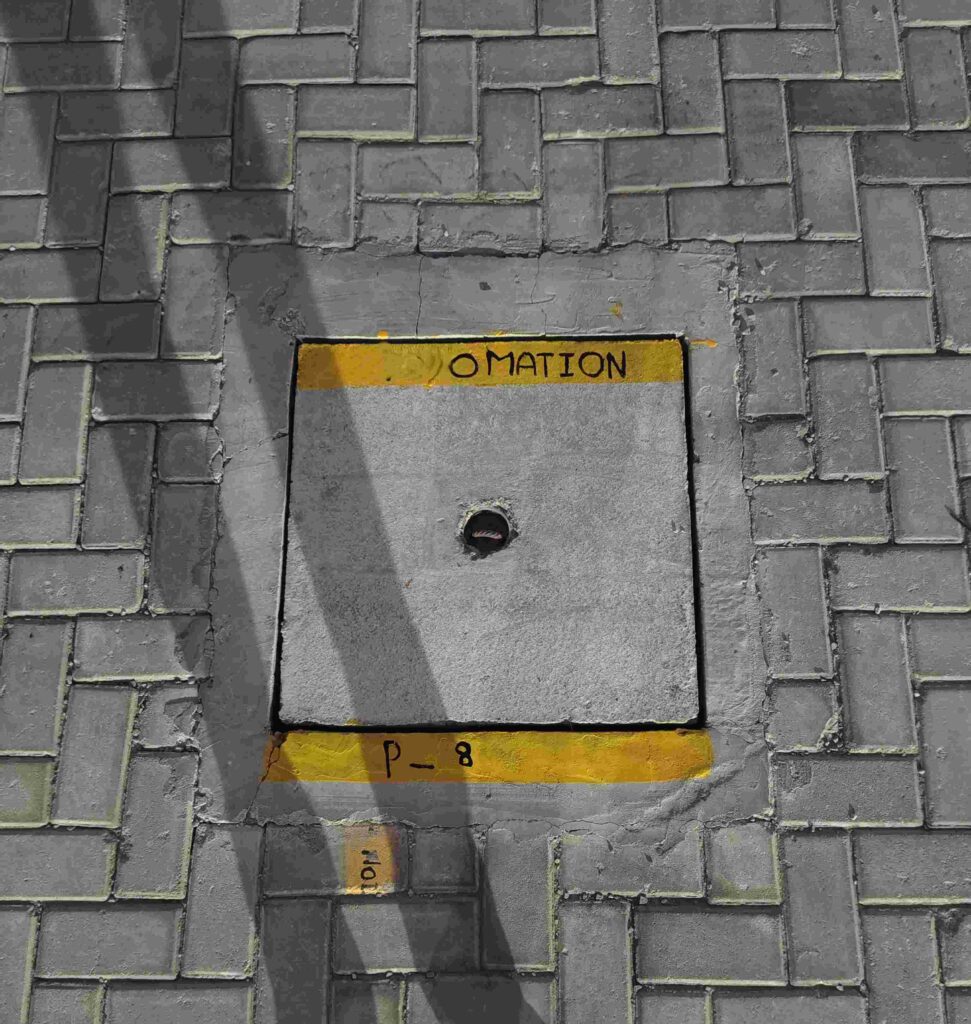
Note: Measure the resistance( >5ohm) at regular intervals (least 2 times in year using a Megger meter, take the readings, and mark them on the earthing chamber.
6.Permissible Earth Resistance Values (The Target Values):
Resistance measurement value should be very important and what should be resistance value as given below sheet as per requirements
Note: Resistance value show be low as much as possible for good earthing like a (0.5 >=5 Ω) and Sensitive equipment>1.0 Ω.
| Resistance Value Across Earthing Type | Maximum Value Allowable Resistance (As per IS 3043 and IEEE 80) |
| IT equipment /Devices (Server room devices, System) | 0.5 Ω |
| Commercial Sub-stations (e.g., inside malls, Network Tower Station) | 1.0 Ω |
| Minor Sub-stations & General Industrial Generator | 2.0 Ω |
| General Commercial / Residential Buildings | 5.0 Ω |
7.Structural & Standard Sizing Rules (Physical Digging):
You cannot just Dig any piece of metal (GI and Copper) into the ground. As per standard National codes mandate exact minimum structural dimensions for safety for Human and system to prevent any damage of losses. What should be specification rule for Earthing as given below points:-
1. Electrode Spacing Rule:
When you fixing Multiple earthing in some specific Area then each pits/earthing electrodes in parallel as show in fig .and the distance between two parallel electrodes must 2 times of length of electrodes or minimum distance ( i.e. Length of rods length 3m) to reduce their rakishness efficiency.
2.Electrode depth as Length with copper Strip Rule:
GI Pipe /Rod electrodes must be length at least 2.5m vertically into the ground but best 3m for good earthing resistance.
For more understanding to see in below picture.
And horizontal copper strip must be depth at least min 60cm below the ground level.
Copper Electrode Plat which is connected to End of GI rod with ground soils and dimensions (1m X1m) and in best way coated layer with Gi to protect as show below fig.
3.Earthing Material Minimum Dimensions:
GI (Galvanized Iron) Pipe Electrode: Minimum diameter of pipe 45mm.
Plate Electrode (Copper/GI): Standard size of (LXWXD) 900 x 900×3.5mm.
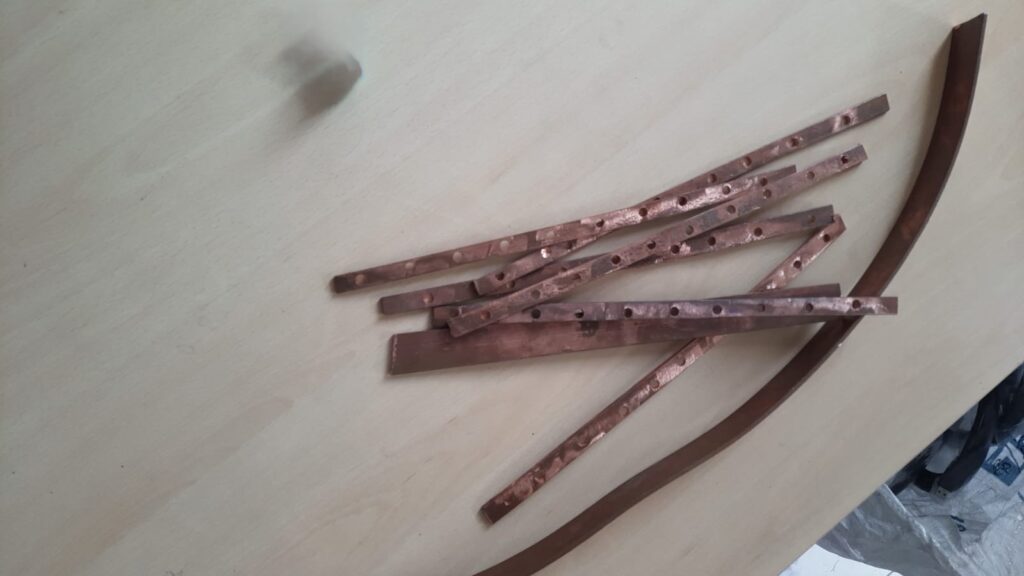
Strip Electrode (Copper): Minimum size of 3mX600mm X 300mm.
Q. Earthing vs. Grounding Vs Neutral: What’are the Difference?
Hints: Earthing (System Grounding) ….
Equipment Grounding….
Neutral (Electrical)
Key Takeaway: Earthing protects the system; grounding protects the people and equipment , Neutral Electrical leakage.