
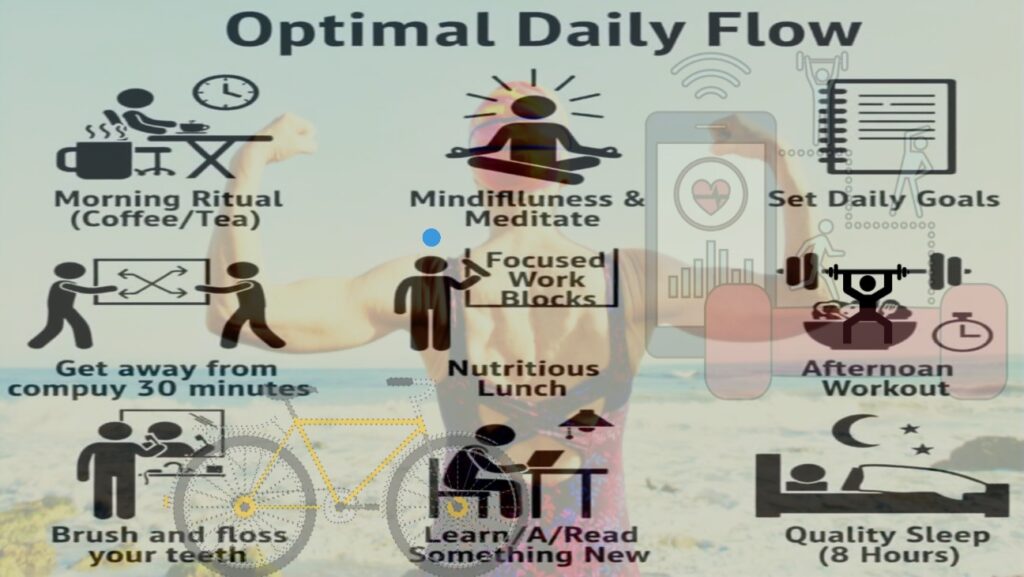
A Brief Daily Health and Fitness Routine
Pillars for Long life, Stability, and Energy
This approach emphasizes the core health pillars—exercise, diet, and rest—using straightforward methods for prefect results.
1. Health Standards Overview
For South Asian populations, experts use slightly stricter guidelines for BMI and waist circumference, as even being underweight can carry health risks, according to Asian Standard Fitness. These numbers use centimetres (cm) and kilograms (kg) for the most accurate results.
| Metric | What It Measures | Goal for Men | Goal for Women |
|---|---|---|---|
| Body Mass Index (BMI) | Uses your height (in cm) and weight (in kg) to check risk (calculated using kg/m²). | 18.5 to 22.9 | 18.5 to 22.9 |
| Waist Size | Measures dangerous fat around your organs (in centimetres). | Below 90 cm (≈ 35.5 inches) | Below 80 cm (≈ 31.5 inches) |
| Asian Standard-A | As per Asian Human fits Cm and weight | 5′ 1″ (155 cm) & 54.5 kg | 5′ 1″ (155 cm) & 55.8 kg |
| Asian Standard-B | As per Asian Human fits Cm and weight | 5′ 7″ (170 cm) & 67.5 kg | 5′ 7″ (170 cm) & 73.5 kg |
Important Note: If your BMI is 23.0 or higher, your health risks increase. Waist size is often the most important measure of heart health!
2. The Weekly Minimum Activity Goals
| Component | Minimum Recommendation | Practical |
|---|---|---|
| Aerobic Activity | 150 minutes of moderate-intensity OR 75 minutes of vigorous-intensity. | ≈ 30 minutes of brisk walking or light cardio, 5 days a week. |
| Strength Training | 2 or more days per week, working all major muscle groups. | 2 x 30-minute sessions of bodyweight or resistance training (e.g., Monday and Thursday). |
| Rest & Sleep | 7 to 9 hours per night for most adults Age. | Establish a consistent bedtime and wake-up time. |
3. The Practical Daily Plan
Morning (Setting the Attitude)
| Time Slot | Action | Why it Works (Science Says) |
|---|---|---|
| Wake-Up | Hydrate Immediately | Replaces fluid lost overnight and supports metabolic health. |
| 5-10 Minutes | Mindful Movement/Stretch | Increases blood flow and prepares the body for the day, reducing injury risk. |
| Breakfast | Prioritize Protein & Fiber | Stabilizes blood sugar, provides sustained energy, and prevents mid-morning fatigue. |
| During Commute/Work | Incorporate Movement | Offsets the risks of sitting for long periods. |
Mid-Day & Afternoon (Sustained Energy)
| Time Slot | Action | Why it Works (Science Says) |
|---|---|---|
| Lunch | Eat a Plant-Forward Meal | Provides essential micronutrients and fiber, supporting gut and heart health. |
| Every 30-60 Minutes | The Break-Up Rule | Get up, walk for 2-5 minutes, or stretch. Reducing chair sitting time is key! |
| Peak Exercise Time | 30 Minutes of Activity | Schedule your activity now. Studies show morning or afternoon exercise is best for sleep. |
| Hydration | Continuous Water Intake min 200ml in every single Intake | Critical for cognitive function and physical performance. |
Evening (Restoration & Recovery)
| Time Slot | Action | Why it Works (Science Says) |
|---|---|---|
| Dinner | Eat Earlier, Eat Lighter | Stop eating at least 2-3 hours before sleep for better digestion and sleep quality. |
| 60 Minutes Before Bed | The Power-Down Hour | Turn off blue-light screens (phone, TV). Blue light blocks the sleep hormone (melatonin). |
| 10 Minutes | Stress Management | Practice deep breathing or journaling to reduce cortisol (the stress hormone). |
| Bedtime | Aim for 7 to 9 Hours | Go to sleep and wake up at the same time daily to regulate your body’s internal clock on timely. |
4. Actual Exercise: Examples
| Goal | Intensity Level | Examples (Check if you can talk comfortably) |
|---|---|---|
| Moderate Aerobic | Heart rate and breathing increase, but you can still hold a conversation. | Brisk walking (3.0 mph or faster), light Home movement, dancing, or water exercises. |
| Vigorous Aerobic | Breathing is deep and rapid; you can only say a few words without pausing for breath. | Running, swimming laps, hiking uphill, or tennis (singles). |
| Strength Training | Work muscles to the point of temporary fatigue (12 to 15 repetitions). | Bodyweight (push-ups, squats, lunges), free weights, or resistance bands. |
5. The Nutritional Plate Focus
The Plate Method:
Aim to fill your plate roughly with:
- 50% Vegetables & Fruits (Focus on variety and color).
- 24% Lean Protein (Beans, lentils, tofu, eggs, fish, chicken).
- 26% Whole Grains/Complex Carbs (Oats, brown rice, whole-wheat products).
The Crucial Role of Healthy Fats: Include sources of unsaturated fats (nuts, seeds, olive oil, and fatty fish) in your diet daily. These are good for brain and heart health.
Limiting the “Big Three” Processed Ingredients: Reduce your intake of added sugars, refined grains (like white flour), and unhealthy saturated fats found in fast food and highly processed snacks.
6. Mental & Social Wellness
Daily Stress Management: Dedicate 10 minutes (morning or evening) to a practice that calms your nervous system, such as meditation or deep breathing.
Nourish Social Connections: Strong social relationships are linked to better mental health and longevity. Make time for meaningful conversations with loved ones.
Cognitive Activity: Keep your brain sharp by taking up stimulating hobbies like reading, learning a new language, or solving puzzles.
7. Best Example Tips (The Easy to Do)
8. What to Avoid (Habits to Break)
- The Liquid Sugar Trap: Avoid sugary drinks like sodas, Pepsi and most fruit juices. They spike blood sugar without providing useful nutrition.
- Late-Night Feasting: Avoid eating any heavy meal 3 hours before going to sleep. This disrupts digestion and compromises your rest and repair cycle.
- Mindless Eating: Avoid eating meals while looking at a screen (TV, phone, computer). When you’re distracted, you tend to eat more and enjoy the food less.
- The Weekend Sleep Catch-Up Myth: Try to maintain your regular wake-up time within an hour, even on weekends, to keep your body’s internal clock consistent.