
A Global Cultures: Heritage, Celebrations, Cuisine, & Festivals
A great overview of the unique cultural heritage, celebrations, food, and festivals of countries worldwide.
The Languages We Speak
Language is the cornerstone of culture. While many nations have a single official language, some are officially multilingual, reflecting a rich history of diverse communities. This chart compares the number of officially recognized languages in several countries from our best study-Visit.
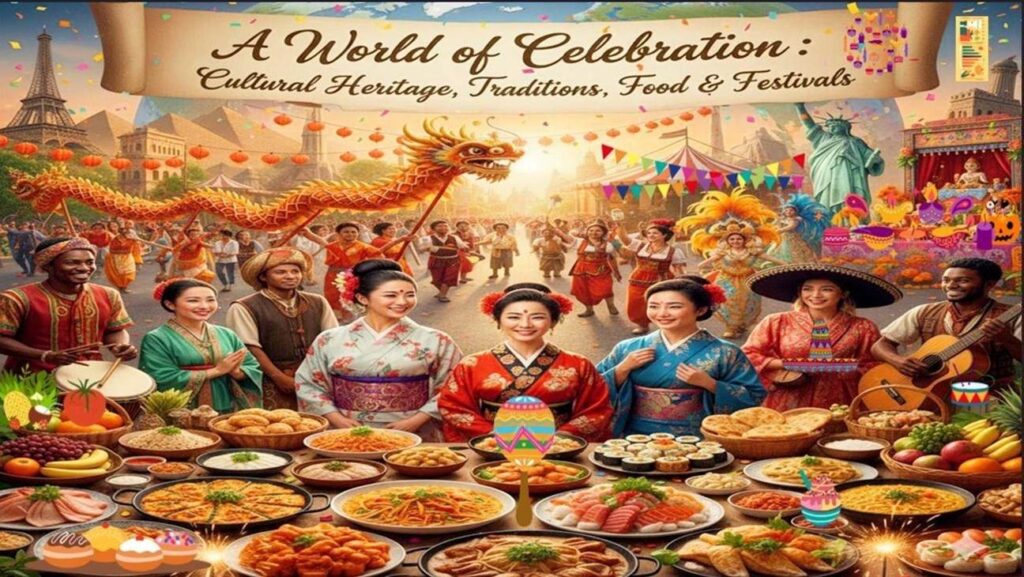
A World of Celebration
Festivals are a vibrant expression of cultural identity, marking historical events, religious occasions, and seasonal changes. Below are some of the world’s most iconic celebrations around you, organized by country, each with its unique customs and significance.
Brazil 
Carnival: A world-famous week-long celebration with samba, parades, and elaborate costumes.
Festa Junina: A festival celebrating the harvest season with traditional food, music, and dance.
Canada 
Canada Day: Celebrates the nation’s birthday on July 1st with parades and fireworks.
China 
Mid-Autumn Festival: Celebrated by admiring the full moon and eating moon cakes with family.
Chinese New Year: A major spring festival celebrating the start of a new year with family gatherings and fireworks.
France 
Bastille Day: Marks the turning point of the French Revolution with military parades and celebrations.
Germany 
Oktoberfest: The world’s largest beer festival, a Bavarian tradition with folk music, food, and parades.
Cologne Carnival: A massive street festival with parades, costumes, and music, marking the start of Lent.
India 
Diwali: The five-day festival of lights symbolizes the victory of good over evil with lamps and fireworks.
Holi: A spring festival of colors, celebrated with music, dance, and throwing colored powders.
Japan 
Hanami: The traditional custom of well viewing cherry blossoms to welcome spring and enjoy their fleeting beauty.
Gion Matsuri: A month-long festival in Kyoto, featuring a spectacular parade of decorated floats.
Mexico 
Día de los Muertos: A colorful festival to remember and honor deceased precious ones with altars and marigolds.
Semana Santa: Holy Week, a religious observance with processions and renovations across the country.
New Zealand 
Matariki: A festival marking the start of the Māori New Year with feasts and cultural performances.
South Korea 
Chuseok: A major harvest festival and a three-day holiday for families to gather and give thanks.
Spain 
La Tomatina: An annual festival held in the town of Buñol where people throw tomatoes at each other.
Thailand 
Songkran: The traditional Thai New Year’s festival, celebrated with large-scale public water fights.
United Arab Emirates 
Eid al-Fitr: Marks the end of Ramadan with feasts, family gatherings, and gift-giving.
Dubai Shopping Festival: A month-long festival with retail promotions, concerts, and entertainment.
United Kingdom 
Notting Hill Carnival: A vibrant annual street festival in London, celebrating Caribbean culture.
Guy Fawkes Night: Also known as Bonfire Night, a traditional celebration with fireworks and bonfires.
United States of America 
Thanksgiving: A national holiday centered around a harvest meal, a time for gratitude and family.
Independence Day: Celebrated on July 4th with fireworks, parades, and barbecues to commemorate the nation’s founding.
Special Foods
Food is a universal language, and each country’s food tells a story of its history, climate, and people. Here are some of the most iconic dishes and treats from our featured nations.
Brazil
Feijoada: A hearty black bean and meat stew, considered the national dish.
Pão de queijo: Small, baked cheese bread rolls.
Canada
Poutine: French fries and cheese curds topped with gravy.
Nanaimo bar: A no-bake dessert square with chocolate, coconut, and custard.
China
Peking Duck: A classic dish of roasted duck, often served with thin pancakes.
Dim Sum: A variety of small, bite-sized dishes served with tea.
France
Croissant: A buttery, flaky pastry, a staple of French breakfast.
Macarons: Delicate almond meringue cookies with a sweet filling.
Germany
Bratwurst: A type of German sausage, often grilled or pan-fried.
Sauerkraut: Excellently shredded, agitated cabbage, a traditional side dish.
India
Biryani: A mixed rice dish with spices, meat, or vegetables.
Samosa: A fried or baked pastry with a Savory filling, such as spiced potatoes.
Japan
Sushi: A dish of prepared vinegared rice with various ingredients, often seafood.
Ramen: A Japanese noodle soup dish.
Mexico
Tacos: A traditional dish consisting of a corn or wheat tortilla folded around a filling.
Mole: A traditional sauce and marinade, typically containing chili peppers, spices, and chocolate.
New Zealand
Hāngī: A traditional Māori method of cooking food using heated rocks buried in a pit oven.
Pavlova: A meringue-based dessert with a brittle crust and soft, light inside, topped with fruit and beat cream.
South Korea
Kimchi: A traditional side dish of salted and fermented vegetables, most commonly napa cabbage and Korean radishes.
Bibimbap: A rice dish with various vegetables, meat, and a fried egg.
Spain
Paella: A rice dish with saffron, vegetables, and seafood or meat.
Tapas: A wide variety of appetizers or snacks in Spanish cuisine.
Thailand
Pad Thai: A stir-fried rice noodle dish, a popular street food.
Tom Yum Goong: A hot and sour Thai soup with shrimp.
United Arab Emirates
Shawarma: A popular street food consisting of grilled meat cut from a vertical spit.
Machboos: A traditional spiced rice dish often served with meat or fish.
United Kingdom
Fish and Chips: A classic takeaway dish of battered fish and deep-fried potatoes.
Afternoon Tea: A ritual of drinking tea with small sandwiches and cakes.
United States of America
Hamburgers: A classic dish of a grilled patty served in a bun.
Apple Pie: A dessert of spiced apples baked in a flaky crust.
The Rhythm of Nations
Dance is a powerful medium for storytelling, reflecting a nation’s history, spirituality, and social customs. This chart compares the dance characteristics of several countries and shows how their dance movements vary, from traditional and formal to modern and acrobatic.
Unique Cultural Cornerstones
Every culture has its own core values and philosophies that shape its society. From a sense of community to the pursuit of happiness, these concepts are fundamental to national identity.
🕯️
Hygge Denmark
The quality of cozy comfort and contentment, enjoying simple things in life.
🏔️
Sisu Finland
A concept of stoic determination, flexibility, and perseverance in the face of adversity.
😔
Saudade Brazil
A deep emotional state of melancholic longing for something or someone that one loves but is missing.
🤝
Harambee Kenya
A spirit of “pulling together” for community self-help and the common good.
💃
La Dolce Vita Italy
“The sweet life,” an appreciation for pleasure, beauty, and leisure.
✨
Namaste India
A greeting that recognizes the divine spark within each person.
🫂
Mateship Australia
A cultural idiom emphasizing friendship, loyalty, and equality.
🤲
Tolerance United Arab Emirates
A core value of hospitality and tolerance, welcoming people from all over the world.
🔗
Guanxi China
A network of reciprocal relationships and social connections.
🚀
American Dream USA
The belief in individual freedom and the chase of success through hard work.
🧭
Ikigai Japan
A reason for being; the intersection of what you love, what you are good at, what the world needs, and what you can be paid for.
😊
Gemütlichkeit Germany
A state of coziness, comfort, and good cheer, often associated with a sense of belonging.
🎉
Fiesta Mexico
A term for a party or celebration, a keystone of social life and community.