
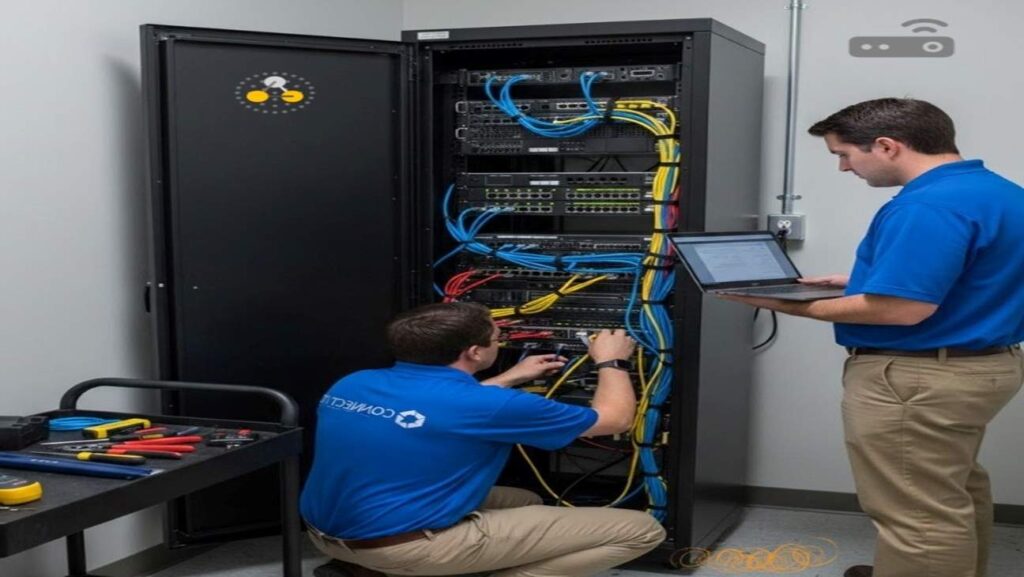
Setting up a professionally engineered network requires a balance between hardware installation (physical and logical), organization, and stand-alone network placement in network racks, along with proper dressing of all cables, such as power, earthing, and data cables as Tags and hardware verification to ensure smooth maintenance. Here’s a guide to building a reliable business Network infrastructure Desing to your needs.
1. Network Rack Selection for Installation
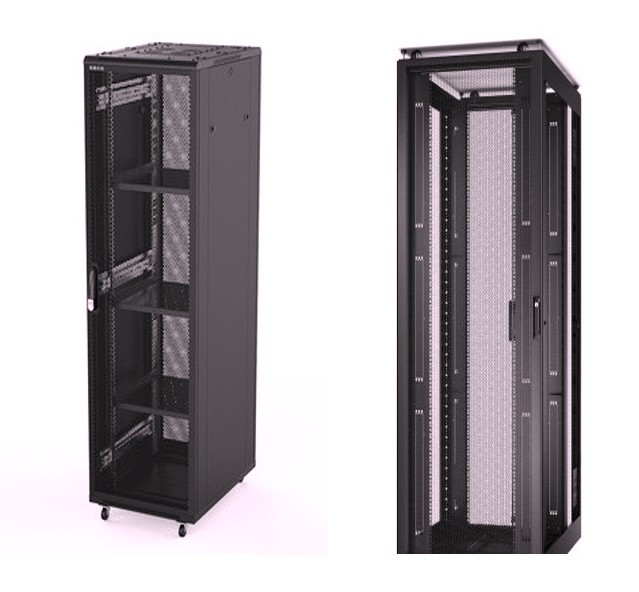
The first step is to select and install a network rack based on your specific equipment placement needs (typically 19U or 42U). While 19U is available for smaller setups, a 42U rack is recommended for most official business needs – vertical space and cable clutter are easier to maintain, and you can add servers and additional equipment for expansion for future business growth.
2. Standardized Power, Earthing and Data Cable Deployment
Lay your power cables, earthing cables and Cat6 data cabling to industry standards because reliability starts at the physical layer.
- Labelling: Always use tags/labels of High quality and durable (PVC) on both ends (destination to Sources) of every cable.
- Dressing: Proper cable dressing is vital for tracing connections and simplifying hardware replacement and Trace during future maintenance.
- Laying the Groundwork: Use high-quality Cat6 data cables and dedicated power and Earthing cables.
- Power connection: PDU is installed on both sides of the back of the network rack and if required ATS is installed at the bottom of the rack and extension is installed at the top and bottom as per requirement and space.
- Ground Connection: Earthing very important part of Network installation and we can’t ignore and make sure all device even rack connected with earthing.
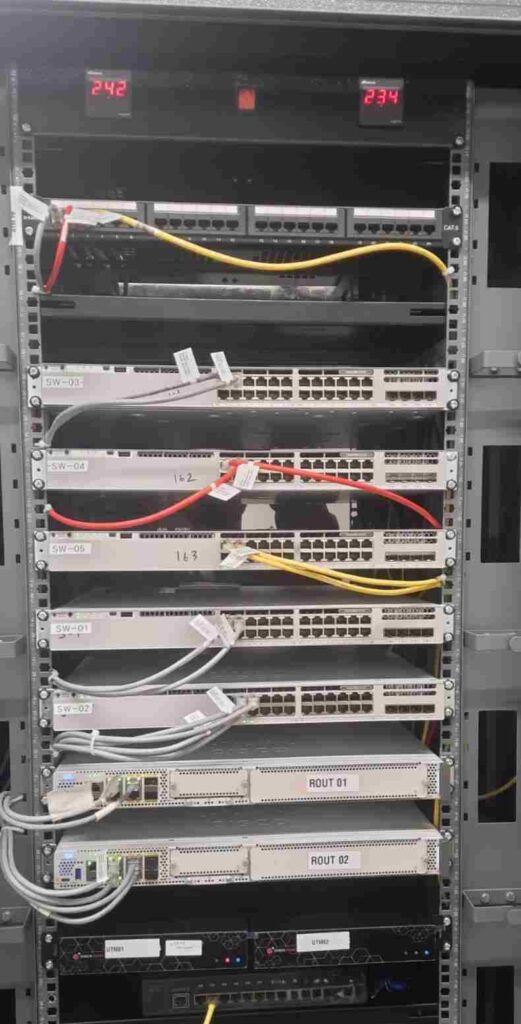
Tips: Power and Data cable never Mixed and used separate route by using Trays or conduits for both cables.
- The Golden Rule: Labelling and “dressing” (neatly bundling) cables are non-negotiable. Proper tags allow for rapid tracing and easy hardware’s and cables replacement during maintenance, saving hours of troubleshooting later
3. Hardware Installation Hierarchy
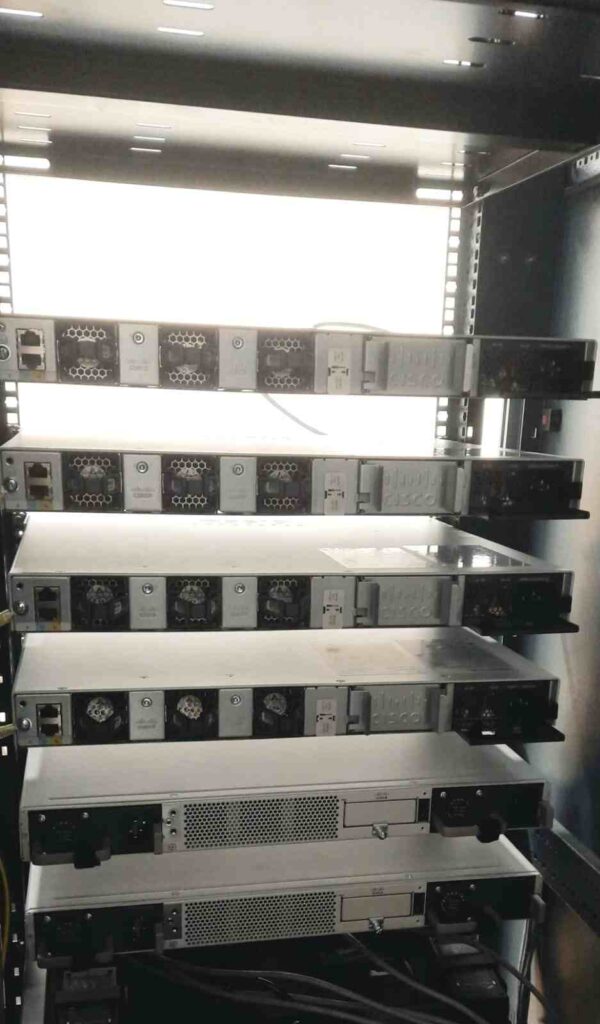
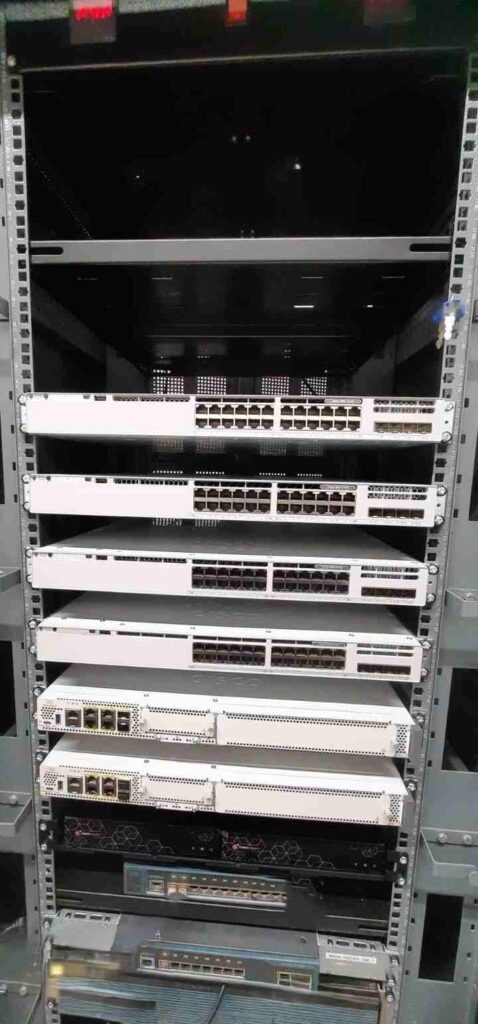
Install hardware using a standard vertical hierarchy, best practice leaving at least a 1U gap between of each network devices for airflow and heat dissipation to prevent overheating and ensure easy access. The recommended sequence from top to bottom is:
The Recommended Top-to-Bottom Sequence:
- LIU (Light Interface Unit): Positioned at the very top if Fiber optic connectivity is required.
- Network Switches: Installed starting from the 40U/41U positions.
- Servers: Mounted in the lower section of the rack due to their weight and depth.
- Last as bottom end: Installed ATS witch and PDU back both side of rack.
4. Routing Connection and Cable Management
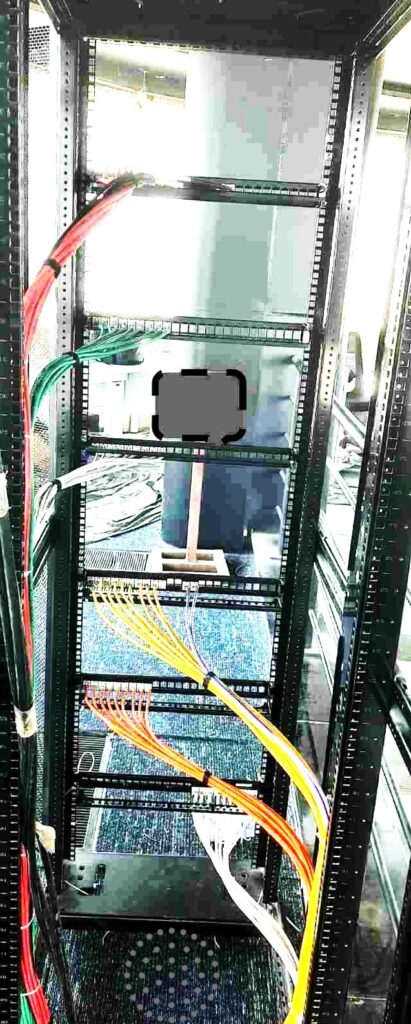
Connect all devices to power and data, ensuring cables are routed through management panels as mentioned above point. Proper routing and dressing are essential to maintain a professional, “standard-well” appearance and to prevent cable strain.
Once the hardware is mounted, connect the power and data cables.
- Routing: Ensure cables are routed through side managers if long distance then must be used cable trays and conduits.
- Dressing: Use Velcro ties (rather than tight plastic zip ties) to secure bundles. This not only looks professional but prevents “alien crosstalk” and physical stress on the ports and quick replace cables when found faulty.
5. Hardware Verification
Check that all hardware is populated correctly. Ensure every component is securely mounted and that all physical connections are tight and installed properly in their ports and Rack position well.
Before powering everything on, perform a physical audit:
- Ensure all hardware is tightly bolted and populated correctly.
- Check that all connectors as per Design Drawing (RJ45, Earthing and Power) are seated firmly in their ports.
- Testing of PENT for data cable, MUSTIMETER for power, OTDR for Fiber report is required to test all Data cables as line tester.
- Verify that the rack is stable Connection, UPS power and properly grounded.
6. Power-On and Status testing & Check
Perform a final system check once the rack is powered on:
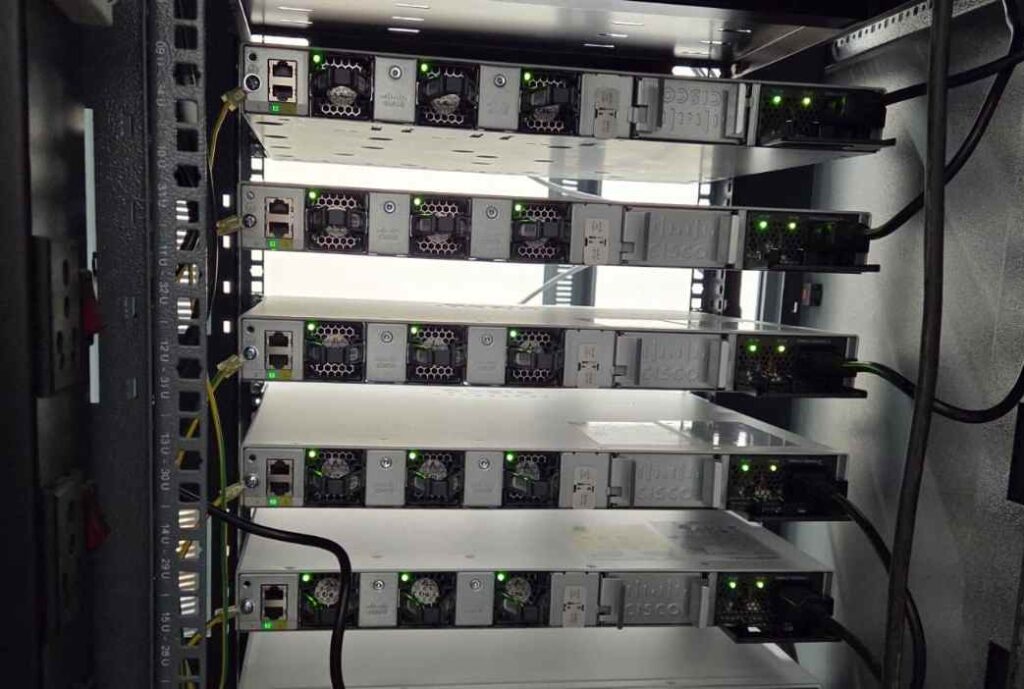
- LED Status: Verify that all device LED backlights are active, indicating power and link activity.
- Operational Check: Confirm all devices are operating as projected.
7.Troubleshooting
If a device fails to connect, check for cable Faulty, check the hardware installation, and verify that the initial configuration is correct. If a device does not show activity, check for damaged cables, wrong port connection, not crimping properly loose connections, or configuration errors.
Summary: Learn the Networking industry standards for Design, installation up a business network, from selecting a 42U rack and managing Cat6 cabling to optimizing hardware hierarchy and troubleshooting connectivity issues.
FAQ
Q: Why is the 1U gap between devices so important? A: It prevents heat buildup by allowing air to mix between high-performance hardware, which extends the lifespan of your equipment.
Q: Can I use Cat5e instead of Cat6? A: While Cat5e works, Cat6 is the modern standard for business. It supports higher data transfer speeds and is better at reducing “crosstalk” (interference) in a crowded rack
Q: What is the most common cause of network failure during installation? A: Usually, it’s poorly crimped Cat6 connectors or cables that have been bent at sharp angles (exceeding the bend radius).