The Future-Proof Mindset
In the modern world, career development requires lifelong learning and upskilling to address skills gaps, foster career agility, and ensure professional growth through problem-solving and soft skills. Competency mapping is crucial for future-proofing skills.
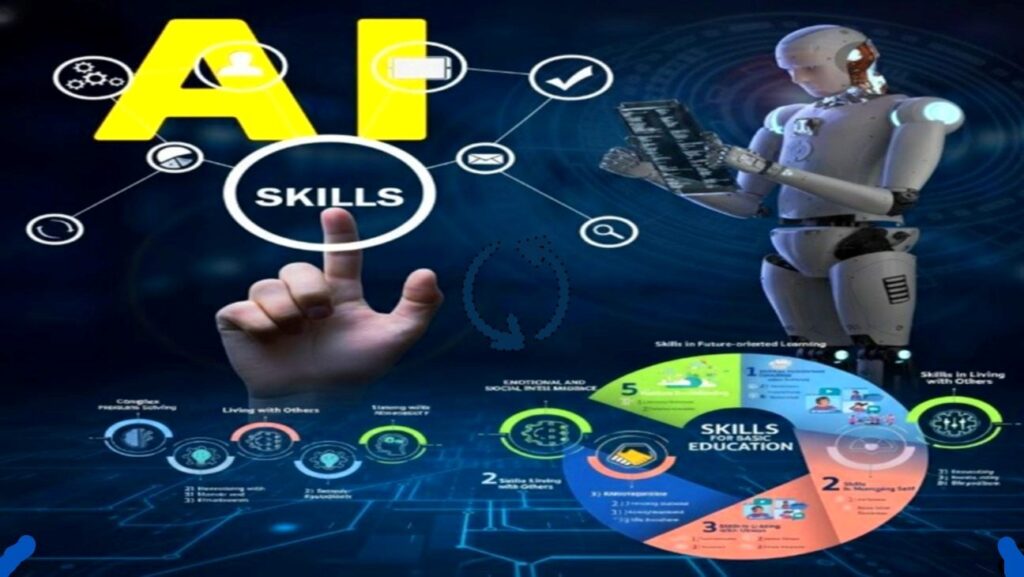
The five pillars of Personal Mastery Skill Up
Cognitive Flexibility
The meta-skill of learning, unlearning, and relearning. It involves moving beyond “fixed” knowledge to fluid problem-solving.
The Centaur Model (AI Fluency)
Don’t compete with AI; lead it. This is the ability to leverage Generative AI to handle data-heavy tasks while you focus on high-level strategy.
Emotional Intelligence (EQ)
Your “Human Moat” consists of empathy, storytelling, and ethical judgment—areas where silicon intelligence currently lacks nuance.
Resilience & Deep Work
The ability to focus deeply in a world of constant distraction is a superpower. Resilience is your mental shock-absorber for change.
Practical Skills in Action
How to apply these concepts when real-world challenges arise.
“AI just automated 60% of my core tasks.”
The Reactive Response: Fear, defensive behavior, trying to prove AI is “wrong.”
The Future-Proof Move: Use the saved 60% time to perform high-level analysis that the AI can’t. If AI writes the report, you focus on the executive presentation and strategy implementation.
“A client is unhappy but won’t say why.”
The Reactive Response: Sending more data, over-explaining the technical specs.
The Future-Proof Move: Switch to EQ Mode. Use the “5 Whys” method in a conversation. Ask: “I sense we aren’t hitting the mark. What does success look like for you personally on this project?”
“My specialized certification is now irrelevant.”
The Reactive Response: Clinging to old methods, ignoring new industry standards.
The Future-Proof Move: Apply Cognitive Flexibility. Treat the old skill as a “foundational mental model.” Spend 1 hour daily in Month 1 on the Toolkit Section apps to bridge the gap.
Adaptability Intelligence (AQ)
While IQ measures logic and EQ measures emotion, AQ (Adaptability Quotient) measures how well you respond to radical changes in your environment. High AQ individuals don’t just “survive” change; they look for the advantage within it.
Divergent Thinking
The ability to generate multiple solutions for a single problem, rather than following a linear path.
Systemic Resilience
Building redundant skills so that if one “skill-set” becomes obsolete, your secondary skills can take over immediately.
The AQ Checklist
- ✓ Can you explain your job in 3 different ways?
- ✓ Do you have 3 “backup” career paths?
- ✓ How fast can you learn a new software tool?
- ✓ Do you embrace uncertainty as a growth signal?
Strategic Networking: The 15-5-7 Rule
Networking is not about collecting business cards; it’s about building an insurance policy for your career. If your industry disappears tomorrow, your network is the bridge to the next one.
Minutes/Day: Engaging with peers’ content and sharing insights.
Introductions/Month: Connecting two people who can help each other.
Deep Connections/Year: Fostering “Inner Circle” mentor relationships.
A Living Example
“A Senior Designer at a failing fintech startup spent 15 minutes a day helping junior designers on LinkedIn. When the startup folded, she didn’t apply for jobs—three of the juniors’ managers reached out to hire her because of the authority she built through giving.”
Key Insight
“The best time to build your network is when you don’t need it.”
Daily upskilling protocol for future-proof career development.
08:00 – 09:30: The Innovation Window
Practice AI Prompting or learning a tool from the Toolkit. Do this while your brain is fresh. Avoid emails.
09:30 – 11:30: The Deep Work Sprint
Apply 100% focus to your hardest problem. Turn off all notifications. Use the “Flow State” to out-produce AI.
13:30 – 14:00: The Connection 15
Execute your 15 minutes of networking. Congratulate a peer, share a resource, or comment on a trend.
17:00 – 17:30: The Reflection Loop
What did you learn? What was hard? Use the Feynman Technique in your notes for 5 minutes.
Essential Technology Stack
AI & Logic Tools
Focus & Clarity
Creative Output
Your 90-Day Implementation
Future-proofing is a habit, not a project. Follow this phase-based roadmap to build your foundation.
Baseline Analysis
- ✓ AI Inventory: Identify 3 manual tasks (emails, data entry) to delegate.
- ✓ Focus Audit: Use a tracker for 1 week to find your Peak Energy hours.
- ✓ Network Gap: Audit your ‘Top 7’. Do they represent your future or your past?
Skill Layering
- ✓ Side Project: Spend 3 hours a week building a tangible asset (blog, tool, deck).
- ✓ Mastery: Practice the Feynman Technique on a new industry trend.
- ✓ Social Value: Reach the ‘5 monthly intros’ target to build authority.
Authority Scaling
- ✓ Outreach: Request 1 informational interview with a person 2 levels ahead.
- ✓ Deep Work: Achieve a full week of consistent 90-minute ‘Deep Work’ sprints.
- ✓ Feedback Loop: Publish your project or share insights to invite critique.
Real-World Case Study: The Pivot
The Situation: A Retail Analyst (Role A) sees that automated dashboards are beginning to replace her core daily reporting tasks.
The Pivot: She uses Month 1 to automate her reports, Month 2 to learn Python for data visualization (Layering), and Month 3 to present “Predictive Insights” to her manager—shifting her value from “Reporting” to “Strategy.”